Tahini has clear demand in the U.S., but it is also one of the food groups that most often gets held at the border. According to FDA import refusal records, 26 tahini and sesame entries from 8 exporting firms were refused entry into the U.S. between March 3, 2025 and September 1, 2026. The number points less to the product itself and more to where pre-shipment preparation fell short.
Looking at the refusal reasons, the picture splits into two parts. On one side are Salmonella and sanitary conditions; sesame and tahini are among the products the FDA monitors for Salmonella. On the other side is the label: the Nutrition Facts panel, net quantity, required information in English and misleading statements. Because the label side is document-based, it can be corrected before the product ships. On the Salmonella side, independent laboratory testing and process controls can help reduce the risk.
In this article we explain what the FDA data shows, how Import Alert 99-19 can affect tahini manufacturers, and which checks make more sense to complete before shipment.
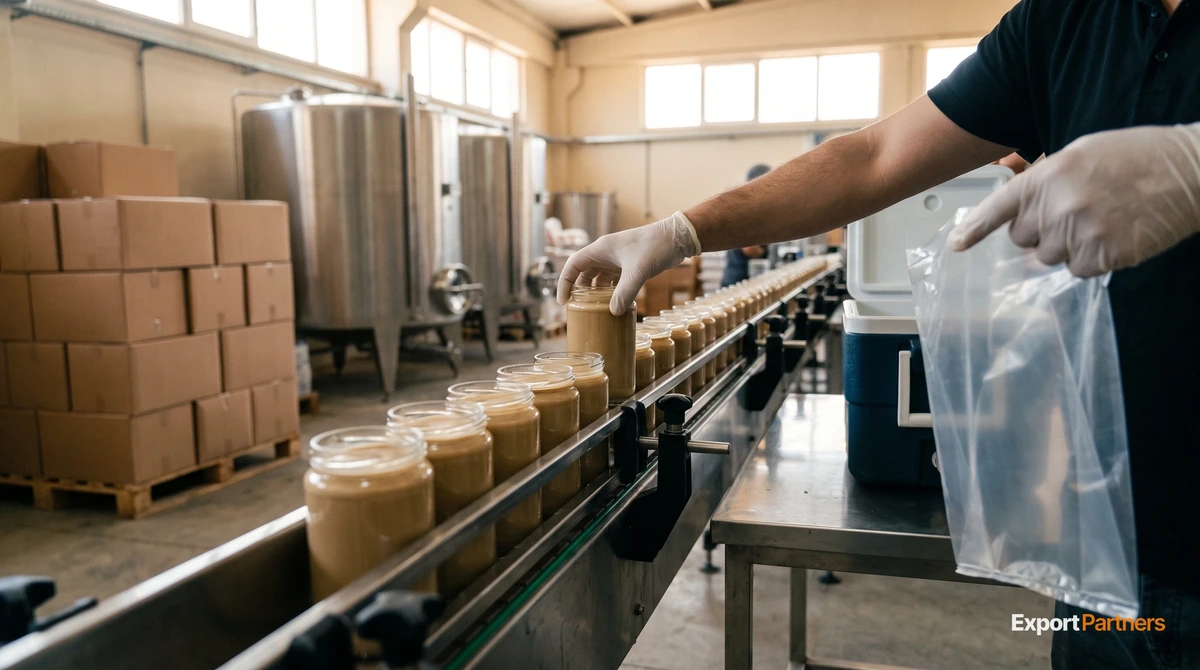
What do refused tahini shipments in the U.S. show?
The FDA publishes every entry it refuses at the border together with a charge code (FDA Data Dashboard, Import Refusals). For tahini, sesame paste and sesame seed entries in the records we reviewed over an 18-month period, the reasons were:
| FDA refusal code | Line items | What it means |
|---|---|---|
| NUTRIT LBL | 13 | Required nutrition information (Nutrition Facts) missing from the label |
| FALSE | 12 | The label contains a false or misleading statement |
| LACKS N/C | 12 | Net quantity not declared correctly on the packaged product |
| NO ENGLISH | 12 | Required information not provided in English |
| SALMONELLA | 11 | Product appears to contain Salmonella |
| POISONOUS | 8 | Product appears to contain a substance harmful to health |
| MFR INJ | 8 | Product appears to have been prepared, packed or held under insanitary conditions that may render it injurious to health |
| MFR INSAN | 6 | Product appears to have been manufactured under insanitary conditions |
| INSANITARY | 1 | Product appears to have been prepared or held under conditions exposed to contamination |
| NO PROCESS | 1 | Required process filing under 21 CFR Part 108 not made |
Because a single entry can carry more than one reason, the totals exceed 26. The key point is this: all four of the most frequent reasons relate to the label. We explain how refusal records are read in general in our article I have FDA registration, so why was my product held at customs?
Why are label-related refusals preventable?
A label error does not depend on a lab result; it can be seen on paper. If the label text is checked against U.S. rules before the jars are filled, most of these four codes can be avoided.
- Nutrition Facts panel: A Nutrition Facts panel is required on packaged food sold in the U.S., and its format, including serving size, is set by 21 CFR 101.9. Translating a per-100-gram table from your home market is not enough.
- Net quantity: According to the FDA labeling guide, net quantity is stated in both metric (grams) and U.S. units (ounces) and placed in the bottom 30 percent of the principal display panel (FDA Food Labeling Guide).
- English: Every piece of information the law requires on the label needs to appear in English (21 CFR 101.15(c)(1)). An incomplete sticker placed over a foreign-language label can be one of the common causes of this code.
- Misleading statements: Unsupported health claims or product names that do not match the contents can fall under the FALSE code. The refusal record does not say which statement caused the problem, so the entire label text is reviewed.
For the full list of required elements, see our article on U.S. labeling rules.
How should the sesame allergen be declared on the label?
Under the FASTER Act, sesame became the ninth major food allergen in the U.S., and since January 1, 2023 it must be declared as an allergen on packaged foods (FDA, FASTER Act). Since tahini is made from sesame, it may seem that no one would miss this, but the format of the declaration also matters.
FDA recognizes three options: using the common name of sesame in the ingredient list, placing a “Contains: Sesame” statement immediately after or next to the ingredient list, or stating it in parentheses after the ingredient name. If sesame and sesame-free products are made in the same facility, the topic is also addressed separately on the labels of products such as halva, crackers or spice blends.
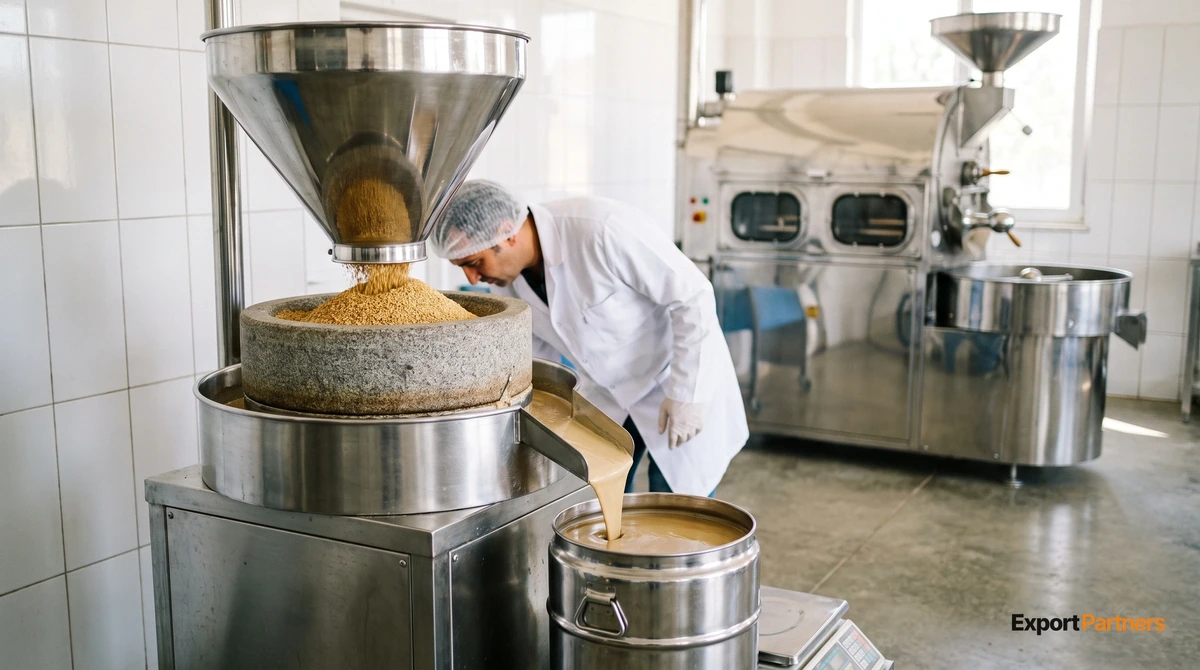
Where does the Salmonella risk in tahini come from?
When the codes citing sanitary conditions and harmful substances (23 times in total) are added to the 11 Salmonella entries in the data, the scale of the non-label risk becomes clear. Cross-contamination after roasting, storage conditions and the quality of the raw sesame therefore become important.
Unlike labeling, this side cannot be solved at a desk. Two things reduce the risk: process control on the production line that separates roasted product from raw material, and Salmonella analysis of a representative sample at an independent laboratory before each shipment. An analysis result alone is not a guarantee, but it catches risk early and can serve as evidence in a possible detention.
How does Import Alert 99-19 affect tahini companies?
FDA’s Import Alert 99-19 places food products that are not covered by another alert for Salmonella on the detention without physical examination (DWPE) list. The list works by firm and product: a red-listed firm’s product can be detained at the border without physical examination.
In our check on October 11, 2026, the list included 16 firm records with sesame or tahini entries. Halva entries also appear on the list.
What changes for a firm placed on the red list?
Shipments from a listed firm are held at the border, and release requires showing that the product does not contain Salmonella. As an example of such evidence, FDA cites a private laboratory analysis of a representative sample taken from the detained product. Repeating this process for every shipment can increase time and cost, and it also creates uncertainty for the U.S. buyer.
How does removal from the list work?
To be removed from the list, the firm submits a petition to FDA. According to FDA’s guidance, the petition should explain how the problem occurred, the corrective actions taken, the measures to prevent recurrence and the evidence supporting them. Among examples of evidence, FDA lists 5 consecutive clean shipments and third-party audits; it presents these as examples, not as a required number. The final decision is made under conditions set by FDA and based on the totality of the evidence submitted.
Which checks should be done before shipment?
Since the two risks are addressed in different places, it makes sense to split the checklist in two:
| Check | Risk it reduces | When |
|---|---|---|
| Review of label text against U.S. rules | NUTRIT LBL, LACKS N/C, NO ENGLISH, FALSE | Before the label goes to print |
| Review of the sesame allergen declaration | Missing allergen declaration | Before the label goes to print |
| Salmonella analysis at an independent laboratory | SALMONELLA | Every lot, before loading |
| Post-roasting separation and warehouse hygiene | MFR INJ, MFR INSAN, INSANITARY | Throughout production |
| Up-to-date FDA facility registration | Detention due to unregistered facility | Before production |
We covered the budget impact of analysis, label printing and possible holding times item by item in our article on the cost of exporting food to the U.S.
What should be considered when shipping halva?
Since tahini is the main ingredient of halva, both risks carry over to halva. The sesame allergen is declared on the label as well; varieties with pistachio or cocoa add other allergens too. A separate Nutrition Facts panel is prepared for each variety. On the Salmonella side, the analysis done on tahini can be applied with the same logic to the tahini lot used in the halva.
How do FDA registration and label review services help?
Label-related refusals of tahini are largely the kind that a review before loading can prevent. In our label review service, we check your existing label against U.S. rules and finalize the Nutrition Facts panel, net quantity statement, sesame allergen declaration and required English fields before printing.
If your facility does not have an FDA registration or needs a renewal, we handle the registration and the US Agent side under our FDA registration and certification service.
Frequently asked questions
What is the most common refusal reason for tahini exports to the U.S.?
In tahini and sesame refusals between March 3, 2025 and September 1, 2026, the most common reason was a missing Nutrition Facts panel (13 entries). It was followed by misleading labeling, net quantity and missing English (12 entries each). Salmonella appeared in 11 entries.
Can a firm on Import Alert 99-19 ship tahini to the U.S.?
It can, but the shipment may be detained without physical examination. Release requires evidence that the product does not contain Salmonella, for example a private laboratory analysis of a representative sample.
How long does it take to get removed from an import alert list?
The FDA does not set a fixed timeline. The petition covers the source of the problem, the corrective and preventive actions, and supporting evidence. As an example, the FDA refers to 5 consecutive clean shipments, so the timeline can vary depending on how often the company ships.
Does a tahini label need to declare the sesame allergen separately?
Yes. Since January 1, 2023, sesame has been a major allergen in the U.S. and must be declared on packaged food. It can be declared by name in the ingredient list, with a “Contains: Sesame” statement, or in parentheses after the ingredient name.
Is it enough to put an English sticker over the original label?
A sticker is not a problem in itself; the problem is missing mandatory information. If the Nutrition Facts panel, the net quantity in both units, the allergen declaration and all other required elements appear in English and in U.S. format, a sticker can be used.
Conclusion
For tahini exports to the U.S., FDA data points to two separate tasks. Labeling errors are the most frequent refusal reason, and they are the kind that can be prevented with a review before printing. Salmonella, on the other hand, is managed on the production line and in the laboratory; regular testing both reduces the risk and leaves you with evidence in case of a detention. To review your label or FDA registration together before shipping, contact us.