
When you look at FDA records for manufacturers exporting confectionery to the U.S., the picture is fairly clear: most refusals do not come from a product's taste, packaging or price, but from the color additive inside it. A gummy or hard candy that sells without issue in the European Union or in its home market can be refused at the U.S. border because it contains a dye that is not listed for food use in the U.S.
According to FDA import refusal records, between January 13, 2025 and August 21, 2026, 74 confectionery line items from 14 exporting companies in a single source market were refused entry into the U.S. In 50 of these 74 items the reason was an "unsafe color additive," and in 34 the artificial color was not declared on the label (FDA Import Refusal Report).
In this article we explain what the data shows, which color additives are permitted in the U.S., which dyes commonly used in other markets are not on the U.S. list, and how to check the recipe and label before shipment.
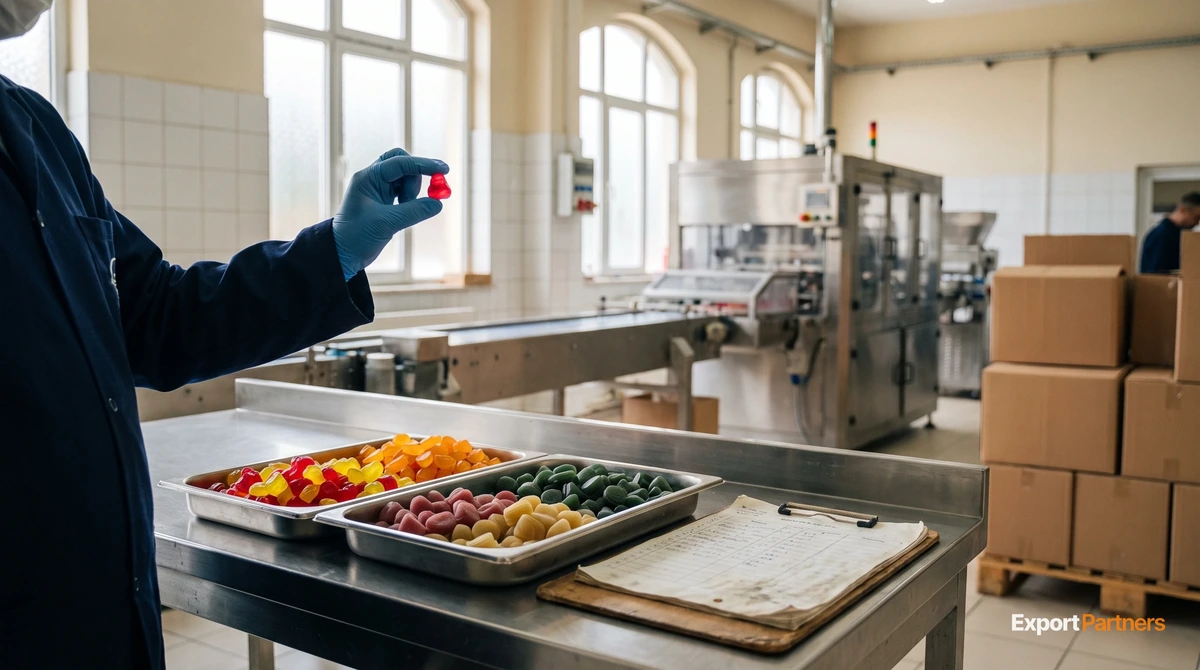
What does FDA data show about confectionery exports to the U.S.?
The table below shows the most frequent refusal reasons recorded for the confectionery items in this data set over the same period. Because more than one reason can be recorded for a single item, the totals add up to more than 74.
| FDA refusal code | Meaning | Line items |
|---|---|---|
| UNSAFE COL | Color additive not permitted in the U.S. for this use | 50 |
| COLOR LBLG | Contains artificial color not declared on the label | 34 |
| NUTRIT LBL | Nutrition Facts panel missing or incorrect | 10 |
| LACKS N/C | Net quantity statement missing or incorrect | 8 |
| MFR INSAN | Manufactured, packed or held under insanitary conditions | 7 |
| MFR INJ | May have been rendered injurious to health due to insanitary conditions | 7 |
| SALMONELLA | Salmonella detected | 6 |
| POISONOUS | May contain a poisonous or deleterious substance | 6 |
| YELLOW #5 | Contains FD&C Yellow No. 5 not declared by name on the label | 5 |
| LABELING | Placement or format of the net quantity statement does not comply | 4 |
FDA product codes do not have a separate category for every regional confection; the refused items fall under hard candy, jelly candy (gummies), soft candy, marshmallow and chocolate bar groups. With 74 items spread across 14 companies, a refusal often appears to affect not a single product but a whole series made with the same recipe.
We explain how the refusal process generally works in our article on refusal at customs for products with FDA registration.
What does an "unsafe color" refusal mean?
The UNSAFE COL code is based on Section 721(a) of the Federal Food, Drug, and Cosmetic Act. Under this section, a color additive is considered safe only if FDA has listed it for that specific use and it is used in line with the conditions in that listing. In other words, the issue is not that the dye has been found "harmful" on its own; it is that the dye is not on the U.S. list for food.
The second key point is certification. Every batch of synthetic dye used in food in the U.S. must be certified by FDA (21 CFR Part 74, Subpart A). For this reason, getting the name of the dye from your supplier may not be enough; it is worth asking under which name the dye is listed in the U.S.
Which synthetic color additives are permitted in food in the U.S.?
As of October 2026, 21 CFR Part 74 Subpart A lists the following certified color additives for food (eCFR). The E number equivalents are taken from FDA's own summary table (FDA).
| U.S. name | Substance | E number | Note |
|---|---|---|---|
| FD&C Blue No. 1 | 74.101 | E133 | |
| FD&C Blue No. 2 | 74.102 | E132 | |
| FD&C Green No. 3 | 74.203 | none | |
| FD&C Red No. 3 | 74.303 | E127 | Authorization for food use ends on January 15, 2027 |
| FD&C Red No. 40 | 74.340 | E129 | |
| FD&C Yellow No. 5 | 74.705 | E102 | Must be declared by name on the label |
| FD&C Yellow No. 6 | 74.706 | E110 |
The list also includes Citrus Red No. 2, which is used only for coloring orange peel and has no relevance for confectionery. Color additives from natural sources that do not require certification (such as beet powder, spirulina extract, carmine, turmeric and paprika) are in a separate list under 21 CFR Part 73. Each section of that list states which products the additive may be used in and under what conditions, so the relevant section should be read separately whenever a recipe changes.
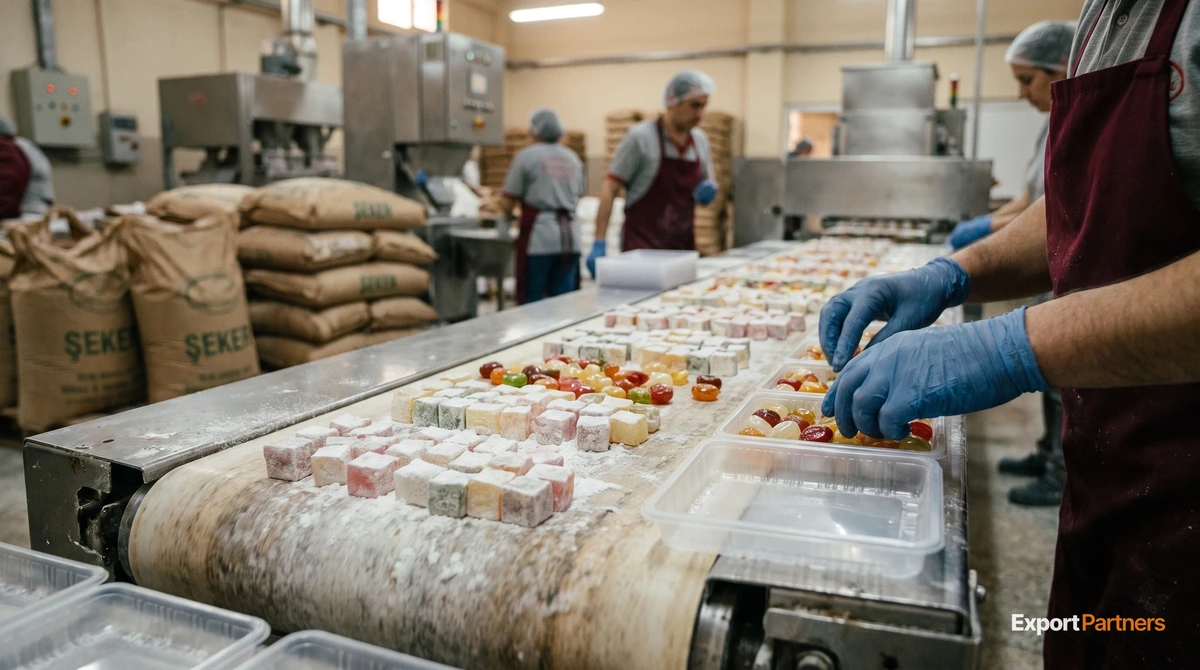
Which colors used in other countries are not listed for food in the U.S.?
In the compliance program written for its import inspection staff, the FDA lists the color additives that are approved in other countries but not listed for food use in the U.S. (FDA Compliance Program 7309.006). The ones most relevant to confectionery manufacturers are:
| Color additive | E number | Other names | Status for food in the U.S. |
|---|---|---|---|
| Ponceau 4R | E124 | Cochineal Red A, Brilliant Scarlet 4R | Not listed, and no certified equivalent |
| Azorubine | E122 | Carmoisine | Not listed |
| Quinoline yellow | E104 | Quinoline Yellow | Not permitted in food |
| Amaranth | E123 | Formerly FD&C Red No. 2 | Not listed |
Similar names are a common trap here. The name “Cochineal Red A” can be confused with carmine (cochineal extract), but it is another name for E124. Quinoline yellow has a form used in U.S. drugs and cosmetics (D&C Yellow No. 10); the FDA notes that the form permitted in Europe is different and that neither can be used in food in the U.S.
The FDA’s import alert for color additives (Import Alert 45-02) covers the same issue and is organized by country, with manufacturers from many exporting countries listed. Later shipments from a manufacturer placed on the alert list can be detained without physical examination, and getting removed from the list requires a separate process.
What is the timeline for Red No. 3 and petroleum-based dyes?
On January 15, 2025, the FDA published its decision revoking the authorization of FD&C Red No. 3 (E127) for use in food. The effective date for food is January 15, 2027 (Federal Register, January 16, 2025). An objection to the decision had temporarily stayed its implementation; the FDA lifted that stay on August 5, 2026 and confirmed the January 15, 2027 date (Federal Register, August 5, 2026).
This date matters for confectionery with a long shelf life: continuing with a recipe that contains Red No. 3 for a batch produced today but entering the U.S. after January 2027 may carry risk. It makes more sense for manufacturers using Red No. 3 to plan the transition now.
On April 22, 2025, the FDA and the U.S. Department of Health and Human Services announced a plan to phase petroleum-based synthetic dyes out of the food supply (FDA). The plan sets a voluntary removal target, pursued together with industry, for Red No. 40, Yellow No. 5, Yellow No. 6, Blue No. 1, Blue No. 2 and Green No. 3; it does not impose a legal ban on these dyes. As of October 2026, all six remain listed for food in 21 CFR Part 74. Still, some buyers in the U.S. may begin asking for naturally colored products, so this trend can be factored in when building a new recipe.
How should artificial colors be declared on the label?
The second largest refusal reason in the data (34 entries) is a permitted dye that was not declared on the label. The rule is in 21 CFR 101.22(k):
- A certified dye is declared in the ingredient list by its U.S. name. The “FD&C” prefix and the term “No.” may be omitted, as in “Red 40” or “Yellow 5”.
- If the lake form of the dye is used, the word “Lake” is also declared, for example “Blue 1 Lake”.
- Writing “color”, “colour” or only the E number does not meet this rule. If desired, the E number can be given in parentheses after the name.
- If carmine or cochineal extract is used, it must be declared by name (21 CFR 73.100).
The “YELLOW #5” refusals in the data show exactly this situation: Yellow No. 5 is a permitted dye, but a product can be refused when it is not declared by name on the label.
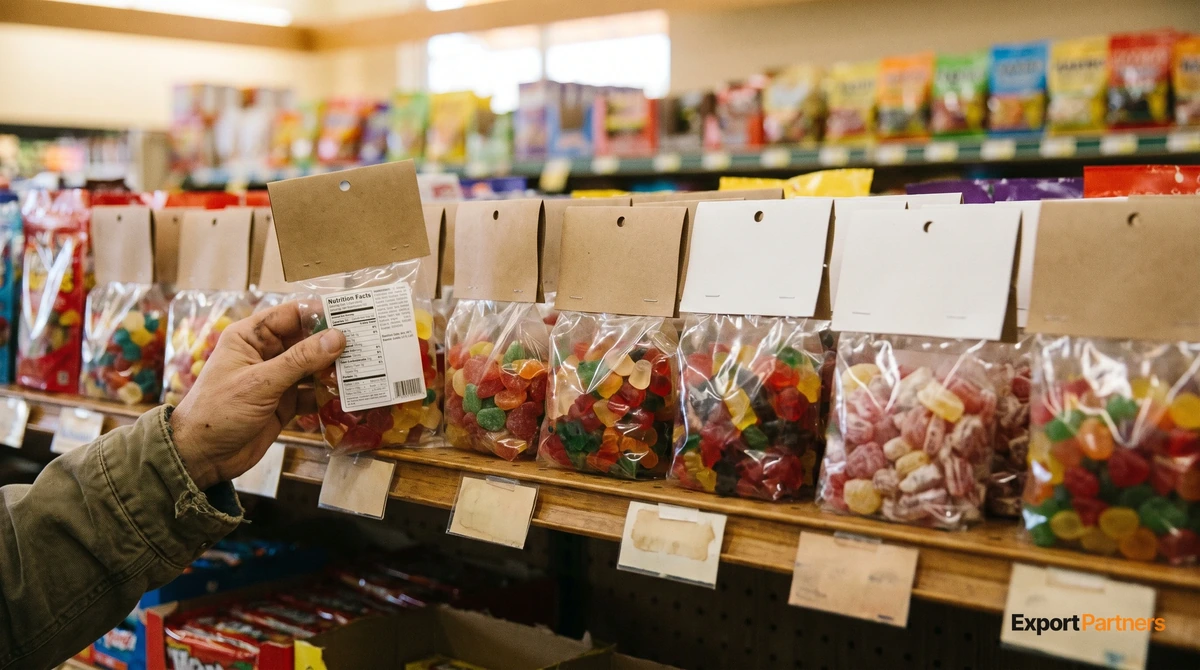
What are the refusal reasons other than color?
Although less frequent than color refusals, three more groups stand out:
- Label information: a missing Nutrition Facts panel (10 entries) and a missing or noncompliant net quantity statement (8 and 4 entries). We summarized the overall structure of a U.S. label in our article on U.S. labeling rules.
- Sanitation: refusals related to manufacturing or storage conditions (7 and 7 entries). These are often based on a facility-level finding and are not resolved through the label.
- Salmonella and filth: 6 entries each. These issues also relate to raw material and production controls, not the label.
How can the recipe and label be checked before shipment?
The good news about color refusals is that they can be checked in advance. The sequence can be set up as follows:
- Take the E number and chemical name of each color additive in the recipe from the supplier’s documentation.
- Compare each one against the U.S. food list (21 CFR Part 74 or Part 73). Choose an alternative for any dye that is not listed.
- Confirm with the supplier that each synthetic dye comes from an FDA-certified batch.
- If Red No. 3 is used, plan the transition around the January 2027 date.
- Declare each dye by its U.S. name in the ingredient list, and prepare the Nutrition Facts panel and net quantity in the U.S. format.
- The facility's FDA registration is checked to confirm it is current.
Destroying or re-exporting a refused shipment usually costs more than a label review done before shipping. We break down each cost item in our article on the cost of exporting food to the U.S.
Frequently asked questions
Why is a color permitted in the EU refused in the U.S.?
The U.S. uses its own list of color additives and does not follow the EU list. Ponceau 4R (E124), azorubine (E122) and quinoline yellow (E104) are permitted in the EU, but they are not listed for food use in the U.S. A product containing an unlisted color may be considered to contain an unsafe color additive under U.S. law.
Is listing only the E number on the label enough?
No. Certified colors should be declared by their U.S. names, for example "Red 40" or "Yellow 5". If you want, the E number can be added in parentheses next to the name.
Until when can confectionery containing Red No. 3 be shipped to the U.S.?
Under the FDA's decision, authorization to use Red No. 3 in food ends on January 15, 2027. It makes more sense not to use Red No. 3 in products entering the U.S. after that date; moving the transition earlier is advisable once shelf life and shipping time are taken into account.
Can refused confectionery be relabeled and brought into the U.S.?
While the product is detained, the importer can request permission to relabel or recondition it using Form FDA 766; the FDA may accept or deny the request (FDA). If the problem is the label, this route may work. If the problem is a non-permitted color, relabeling does not fix it because the product's content stays the same, and after a final refusal the shipment is usually re-exported or destroyed.
Can a company with FDA registration still be refused?
Yes. FDA facility registration is a prerequisite for shipping food to the U.S.; it does not show that the product's ingredients or label comply. Most refusals in the data also come from product and label issues at companies that are registered.
Conclusion
FDA data for confectionery exports to the U.S. between January 13, 2025 and August 21, 2026 shows that refusals cluster in one place: the coloring in the recipe and how it is declared on the label. Replacing colors that are not listed for food in the U.S., such as Ponceau 4R, azorubine and quinoline yellow, and declaring permitted colors by their correct names on the label appears likely to prevent a significant share of the refusals in the data.
At Export Partners, before shipment we check the colorings in your recipe against the U.S. list, review your label under U.S. rules and handle your FDA registration and certification process. For a label review before you ship, contact us.

