
Selling perfume on Amazon works differently from listing an ordinary cosmetic product in the U.S. Most perfumes are alcohol-based and treated as flammable liquids, so Amazon places them under a dangerous goods (hazmat) review; until the product clears this review, it is not accepted into an FBA warehouse. In the U.S., the same product also falls under MoCRA rules as a cosmetic.
The two sides run independently of each other. Amazon's review looks at transport and storage safety, while the FDA side covers facility registration, product listing and the label. The most common delays sellers run into come from noticing one of the two too late.
In this article, we explain which document Amazon asks for, what is checked in the SDS, what MoCRA means for perfume, and the order of steps to complete before shipping.
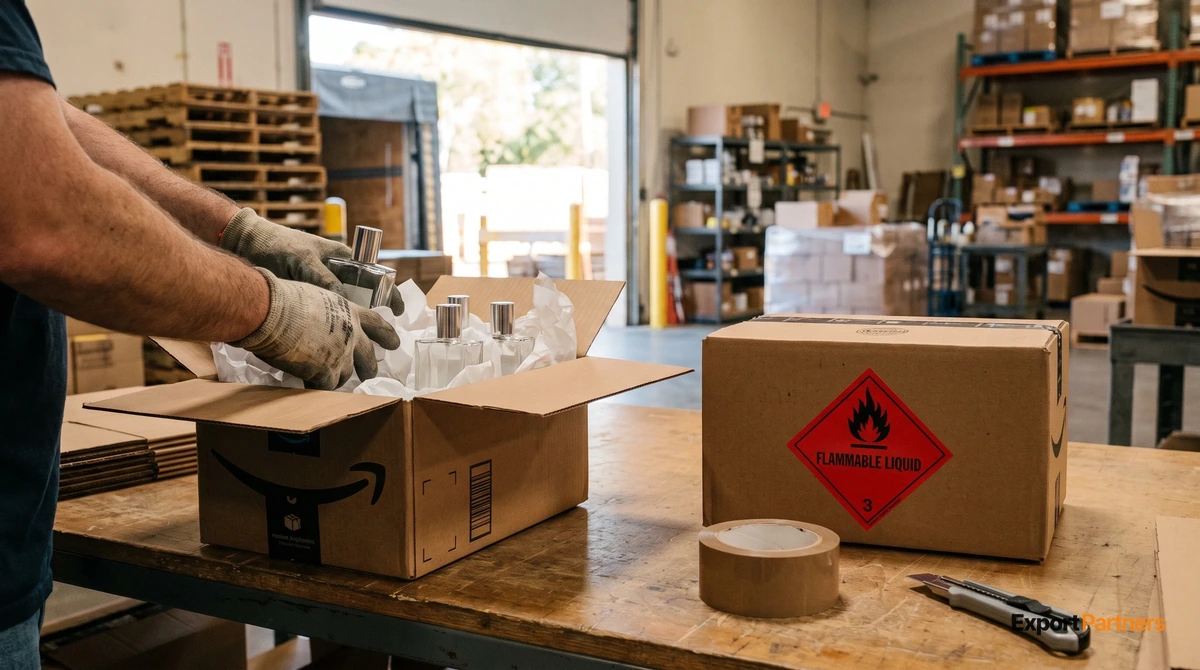
Why is perfume treated as hazmat on Amazon?
Amazon defines dangerous goods as products that may pose a risk if not stored, transported or handled properly, and its own list of examples includes “perfumes and deodorant sprays.” The reason is alcohol: an ethanol-based perfume has a low flash point, so under international transport rules it can be classified as a flammable liquid (Class 3).
This does not mean perfume cannot be sold on Amazon. The product first needs to be classified, then stored in dedicated areas in FBA, and in some cases the seller needs to be enrolled in the FBA dangerous goods program. Alcohol-free, oil-based perfumes and solid perfumes may be classified differently; the product's own safety data sheet determines this.
How does Amazon's hazmat review work?
Once the listing is created, Amazon may ask for a safety data sheet (SDS) or an exemption sheet for the product. The document is uploaded through the “Manage dangerous goods classification” tool in Seller Central, and Amazon's dangerous goods team classifies the product based on it.
For perfume, the exemption sheet is usually not the right path. That form is meant for products containing no flammable, corrosive or explosive substances; for a perfume that contains alcohol, the review will most likely run through the SDS. The SDS is prepared by the manufacturer, not by Amazon, so the document comes from your filling facility or fragrance supplier.
| Step | What to do | Who |
|---|---|---|
| 1. Listing | Create the product page and fill in the compliance fields (flash point, composition, dangerous goods question) correctly | Seller |
| 2. Document request | Amazon asks for an SDS or an exemption sheet | Amazon |
| 3. Upload | Upload the SDS through the “Manage dangerous goods classification” tool | Seller |
| 4. Classification | The product is classified as hazmat or non-hazmat, and a program requirement may follow | Amazon |
| 5. Shipment plan | Do not create an FBA shipment before classification is complete | Seller |
Amazon does not give a set number of days for the review; its own guidance says complete and accurate product information speeds it up. For this reason, it makes more sense not to finalize stock production until the classification result is in.
What is checked in the SDS?
The most common problem on the seller side is an SDS that is inconsistent within itself or with the listing. Amazon compares the document with the information in the listing; two fields that do not match can lead to the review being rejected.
| SDS field | Why it matters |
|---|---|
| Product name and brand | Should match the name in the listing; a different name can make the document look like it belongs to another product |
| Section 2, hazard identification | If it says “flammable liquid,” the transport section should match |
| Section 9, flash point | The value that directly determines the classification |
| Section 14, transport information | UN number and class; perfume usually shows UN1266 and Class 3 |
| Document date and format | Should be recently dated, in GHS format, with all 16 sections completed |
A practical note: the SDS should be uploaded for the finished product (the perfume in the bottle), not the fragrance supplier's document. The fragrance oil's SDS does not show the alcohol content, so the classification may come out wrong.
How is perfume stored in FBA?
According to Amazon, FBA allows certain dangerous goods to be stored and shipped, and these products are kept in safety areas specially designed to reduce risk. For some products, the seller needs to enroll in the FBA dangerous goods program; if the program accepts them, the product can be sold with Prime.
Because capacity in these areas is limited, hazmat storage limits can be tighter than for standard products. Sending a small batch with the first shipment, rather than large inventory, is a safer start in terms of both limits and classification risk. Amazon’s current limits vary by account, so it makes sense to check the capacity screen in Seller Central before planning a shipment.
For the general dangerous goods process and other hazmat products that manufacturers commonly ship, see our guide to selling HAZMAT products on Amazon.
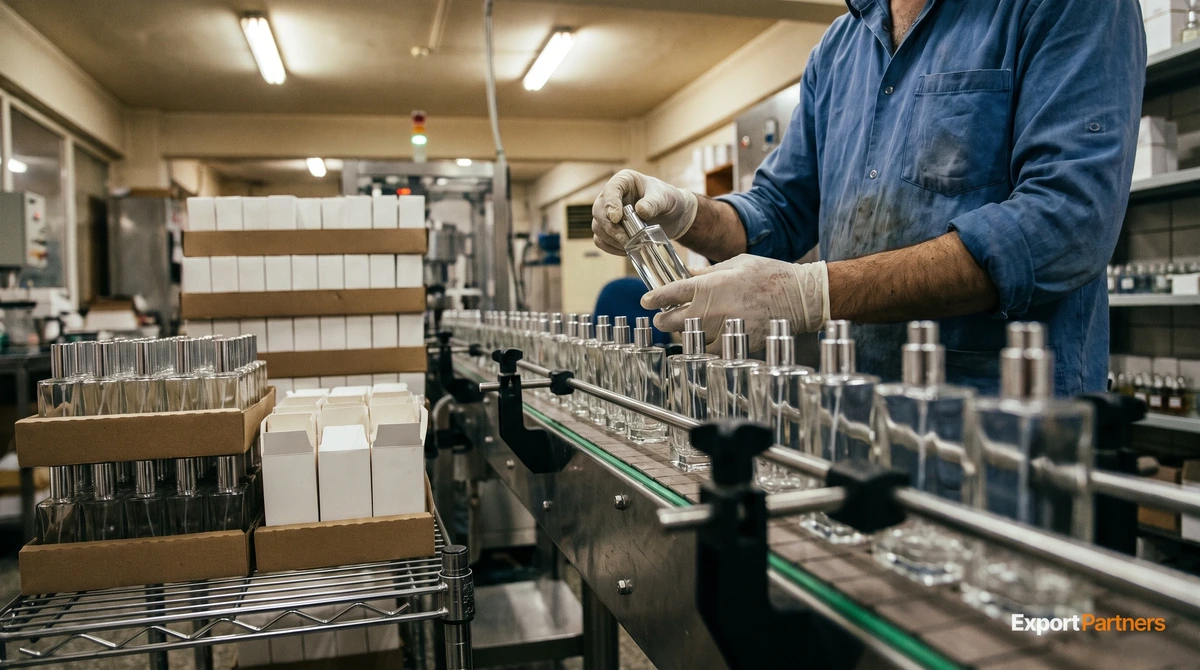
What does MoCRA mean for fragrance manufacturers?
In the U.S., fragrance is classified as a cosmetic and falls under the Modernization of Cosmetics Regulation Act (MoCRA), signed into law on December 29, 2022. MoCRA introduced new FDA requirements for cosmetic products, including facility registration, product listing, serious adverse event reporting and safety substantiation records.
The requirements are split between two parties. The facility that manufactures or fills the product registers with the FDA and renews its registration every two years. The manufacturer, packer or distributor named on the label, known as the “responsible person”, lists each product with its ingredients with the FDA and updates the listing once a year.
| MoCRA requirement | Who is responsible | Note |
|---|---|---|
| Facility registration | Manufacturing or filling facility | Renewed every two years; completed through the FDA’s Cosmetics Direct system |
| Product listing | Responsible person | Includes ingredients, updated once a year |
| Serious adverse event reporting | Responsible person | To the FDA within 15 business days |
| Safety substantiation records | Responsible person | Records showing the product is safe are kept on file |
| Contact information on the label | Responsible person | A U.S. address, U.S. phone number or website for adverse event reporting |
There is also a small business exemption: under the FDA’s definition, businesses with average annual U.S. cosmetic sales below 1 million dollars over the past three years may be exempt from facility registration and product listing. However, this exemption does not remove the serious adverse event reporting requirement or the label contact information requirement. A fragrance brand entering the U.S. for the first time often falls below this threshold; even so, it is worth checking the exemption conditions against your own situation.
For details on MoCRA across cosmetics in general, read our guide to selling cosmetics on Amazon US and MoCRA.
What should a fragrance label include?
A cosmetic label shows the product name, net quantity, ingredient list and the name and address of the responsible company, in English. FDA rules allow fragrance components to be listed collectively under “fragrance” rather than one by one, which lets the product be labeled without disclosing the formula.
MoCRA directed the FDA to write a separate rule requiring fragrance allergens to be disclosed on the label. The content and effective date of this rule were not finalized at the time of publication; it makes sense to check the FDA’s latest announcements before printing labels for the long term. For the general mandatory label elements, see our article on U.S. labeling rules.
On the Amazon side, claims in the listing also matter. When terms such as “long-lasting”, “natural” or “hypoallergenic” are used without substantiation, the listing may be flagged for review; the product description should be consistent with the information on the label.
How is fragrance shipped to the U.S.?
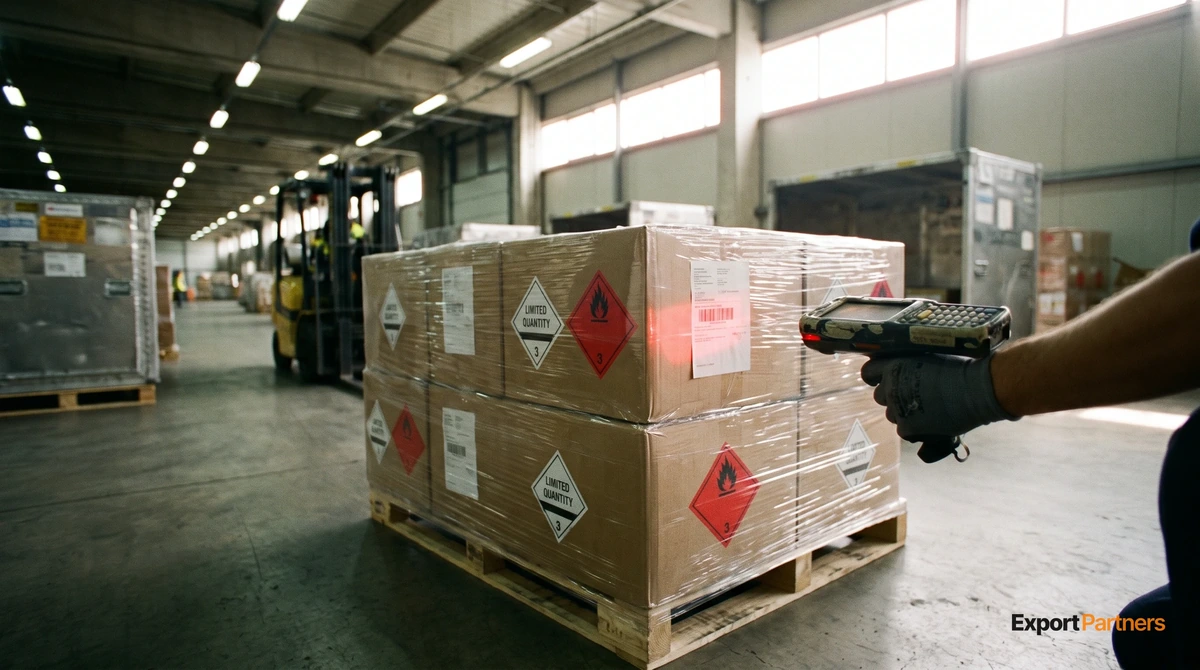
Fragrance also falls under dangerous goods rules on the transport side. For air cargo, the product is declared as a Class 3 flammable liquid and the carrier asks for the SDS separately; some express services accept flammable liquids only from contract customers. For this reason, it is worth discussing the shipment with your logistics provider in advance, based on the product’s SDS and package quantities.
On the customs side there is one difference from food: FDA Prior Notice is not required for cosmetic products. However, an importer of record and a customs bond are still required in the U.S.; since the FBA warehouse is not the importer, this role is taken on by the seller or a designated U.S. company. For bond types and costs, read our article on U.S. customs bonds.
In what order does selling fragrance on Amazon proceed?
With fragrance, putting the steps in the right order is what saves the most time. The sequence below aims to clear two hurdles (Amazon classification and MoCRA) together, before inventory is produced.
| Step | Step | Why in this order |
|---|---|---|
| 1 | Get the finished product’s SDS from the manufacturer | Both Amazon and the carrier work from this document |
| 2 | Clarify your MoCRA status: facility registration, product listing or small business exemption | The responsible company details on the label depend on this |
| 3 | Prepare the label in English and in line with FDA rules | Changing a label after printing is costly |
| 4 | Create the listing on Amazon and upload the SDS | No inventory is shipped before the classification result comes in |
| 5 | Apply to the FBA dangerous goods program if needed | Storage approval may depend on this program |
| 6 | Arrange the importer of record, bond and logistics that can carry dangerous goods | The shipment travels with a hazmat declaration |
| 7 | Send a small first batch to FBA | Keeps capacity limit and classification risk low |
Frequently asked questions
Is fragrance considered hazmat on Amazon?
Most alcohol-based fragrances are flammable liquids, so they go through Amazon’s dangerous goods review. Amazon lists fragrances and deodorant sprays among its own examples. The final classification is determined by the product’s SDS.
Does fragrance need FDA approval?
No, the FDA does not grant pre-market approval for cosmetic products. Under MoCRA there are requirements such as facility registration, product listing, labeling and adverse event reporting; small businesses may be exempt from registration and listing.
Is joining the FBA dangerous goods program mandatory?
Not for every hazmat product. Amazon requires sellers to enroll in the program to store certain dangerous goods; if the product is accepted into the program, it can be sold with Prime. Whether it is required becomes visible in Seller Central once the product has been classified.
Who prepares the SDS?
Amazon does not prepare the SDS; the product's manufacturer or brand owner does. A perfume needs an SDS for the finished product itself; the fragrance oil's document alone may not be enough, since it does not show the alcohol content.
Does a small brand have to complete MoCRA registration?
If average annual cosmetics sales in the U.S. over the past three years are below $1 million, the brand may be exempt from facility registration and product listing. The obligations to show U.S. contact information on the label and to report serious adverse events within 15 business days still apply.
Conclusion
Selling perfume on Amazon goes through two separate gates: Amazon's hazmat classification and the FDA's MoCRA rules. Both can be started before production with the same documents (SDS, ingredient list and label); if they are noticed later, inventory may end up waiting in a warehouse or at the port.
At Export Partners, we handle the Amazon U.S. account, the hazmat classification process, MoCRA registration and label review for perfume and cosmetics manufacturers in a single plan. For details, see our Amazon service page and our FDA registration service.

