
How to Obtain a USDA APHIS Permit (VS Import Permit)
A USDA APHIS permit is the import permit issued by USDA Veterinary Services that allows a product containing animal-origin ingredients to enter the United States (VS Import Permit). Export Partners is a team that handles this permit on behalf of manufacturers, from application to customs clearance, and brings FDA registration, the customs bond and shipping together in one package. One point of contact, same-day response, fixed-price quote.
Same-day response · San Antonio, Texas · US Agent service
USDA · APHISVS Form 16-3FDACustoms bondShipping
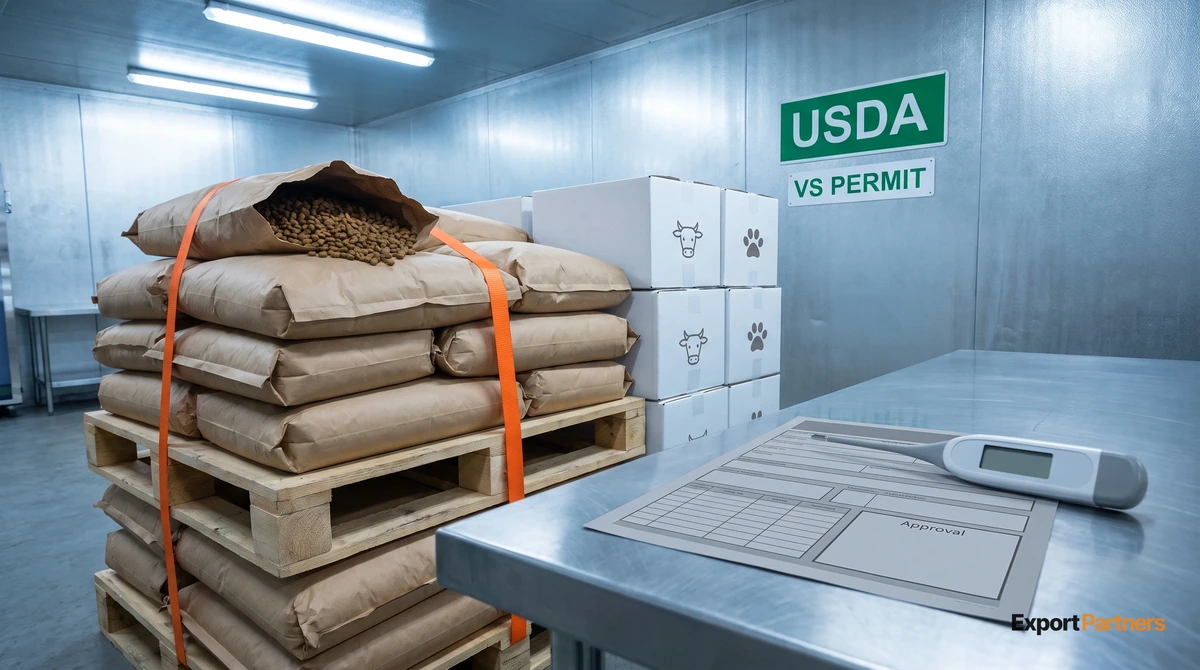
What is a USDA APHIS permit, and how is it different from FDA registration?
For a product with animal-origin ingredients, FDA registration alone is usually not enough. Two separate agencies review two separate things: FDA looks at food safety and the label, while USDA APHIS looks at the risk of the product carrying animal disease into the United States. When one is completed and the other is skipped, the shipment may be held at the port of entry.
Three abbreviations are often confused. Here is the difference:
- USDA: U.S. Department of Agriculture.
- APHIS: the animal and plant health inspection unit within USDA.
- VS (Veterinary Services): the team within APHIS responsible for import permits for animal-origin products. This is the office that reviews the application, and the permit document is called the VS Import Permit.
The reason for the permit is biosecurity: the possibility that diseases such as foot-and-mouth disease, avian influenza and BSE could be carried through animal products keeps these imports subject to a permit. That is why the decision depends less on what the product is and more on the animal health status of the country of origin and how far the product has been processed.
| Agency | What it reviews | Role for animal-origin products |
|---|---|---|
| FDA | Food safety, facility registration, labeling | Facility registration and label compliance for all foods, including pet food |
| USDA APHIS / VS | Biosecurity, animal disease risk | Import permit for animal-origin products (VS Import Permit) |
| USDA FSIS | Inspection of meat, poultry and egg products for human consumption | A separate inspection track for meat products intended as human food |
| CBP | Customs entry | The party that checks the permit number and documents at the border |
Which products need it?
If a product contains an ingredient derived from an animal or in contact with an animal-origin source, it is likely to require a permit. The most commonly missed case is not treating the product as food: even a gelatin capsule in a supplement can trigger the process.
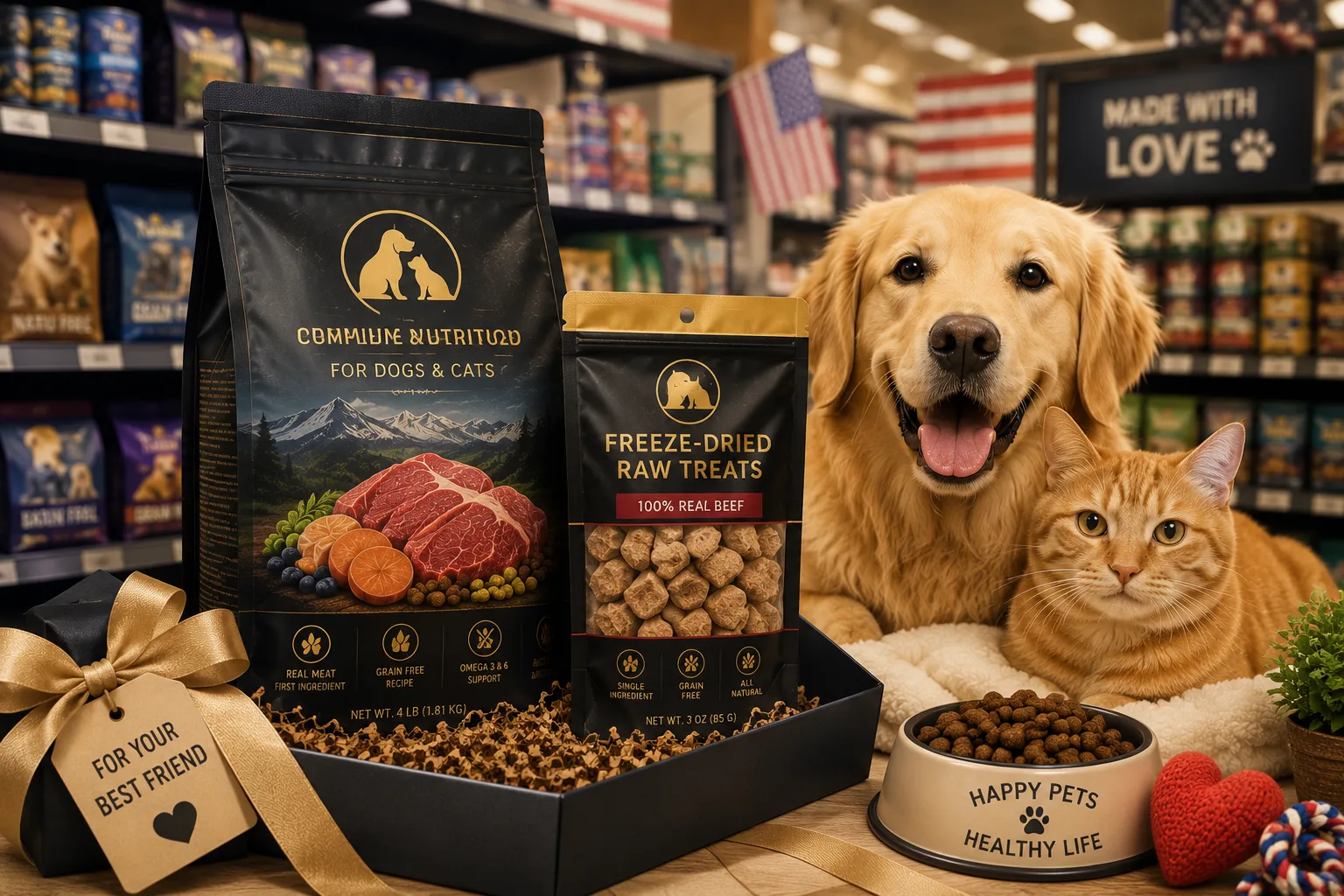
Pet food and dog chews
Animal by-products
Gelatin, collagen and dairy derivatives
Raw materials and textile inputs
How is the permit obtained in four steps?
Determine whether the product requires a permit
Open the account and build the application file
Submit VS Form 16-3 through APHIS eFile
Receive the permit number and prepare the shipping documents
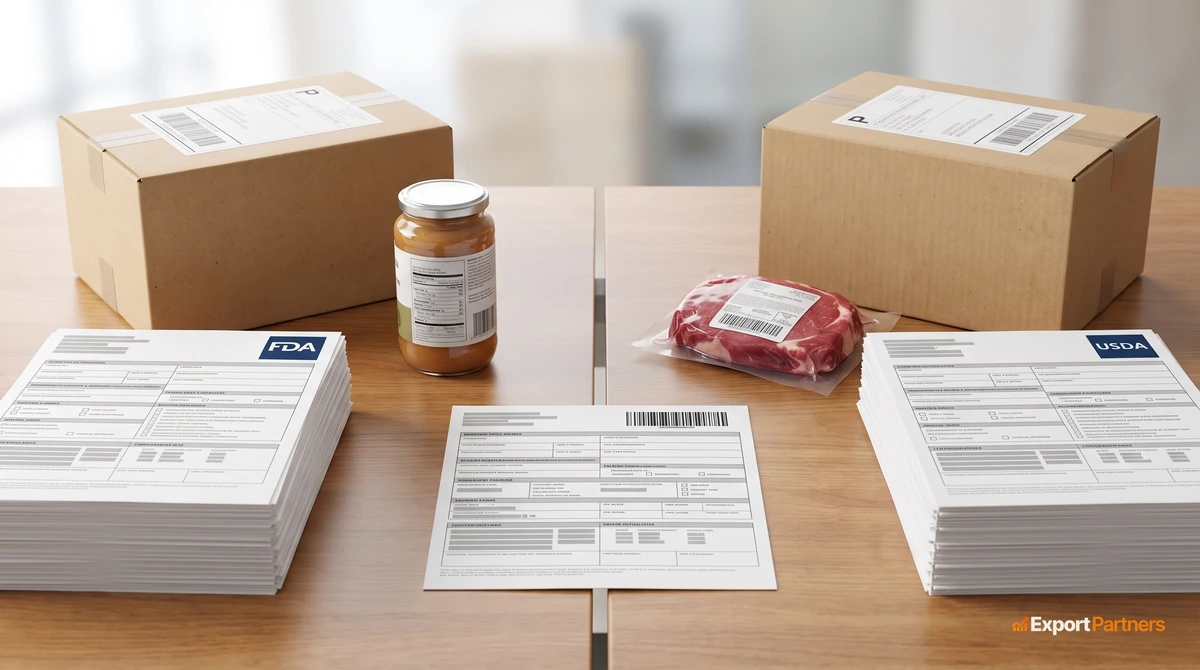
Which documents are required?
| Step | What we need from you |
|---|---|
| Product classification (VSPA) | Product ingredients, animal species, processing method |
| VS Form 16-3 application | Facility details, product description, annual volume |
| Veterinary health certificate | Document from the veterinary authority of the country of origin |
| U.S. importer (Importer of Record) | Buyer details; if there is none yet, we help you arrange one |
| FDA facility registration and US Agent | Facility details, authorized contact |
| Customs bond and shipping | Shipping plan, product and volume |
Approval times vary with APHIS workload at the time and the product category. We do not commit to a timeline; in our experience, the process tends to move faster when the application file is complete.
How is the fee determined?
Pricing depends on three things: how many separate permits the product group requires, whether the FDA side also needs to be set up (facility registration, US Agent, label), and whether we also handle the customs and shipping side of the shipment. We offer a fixed package price for a single product group and a single facility, and we send the quote the same day.
The permit can be obtained on its own, and it is also offered as a package
A USDA permit is often requested on its own, and it can be handled that way. However, the permit is only one link in the chain that brings a product into the United States: if the customs bond, importer registration and shipping are not in place, the cargo may wait even with a permit. We can also offer the items below in a single package.
USDA APHIS permit
FDA facility registration and US Agent
Label review
Customs bond and importer registration
Shipping arrangements
Amazon and sales
Detailed guides and related services
USDA VS Permit guide
Pet food exports
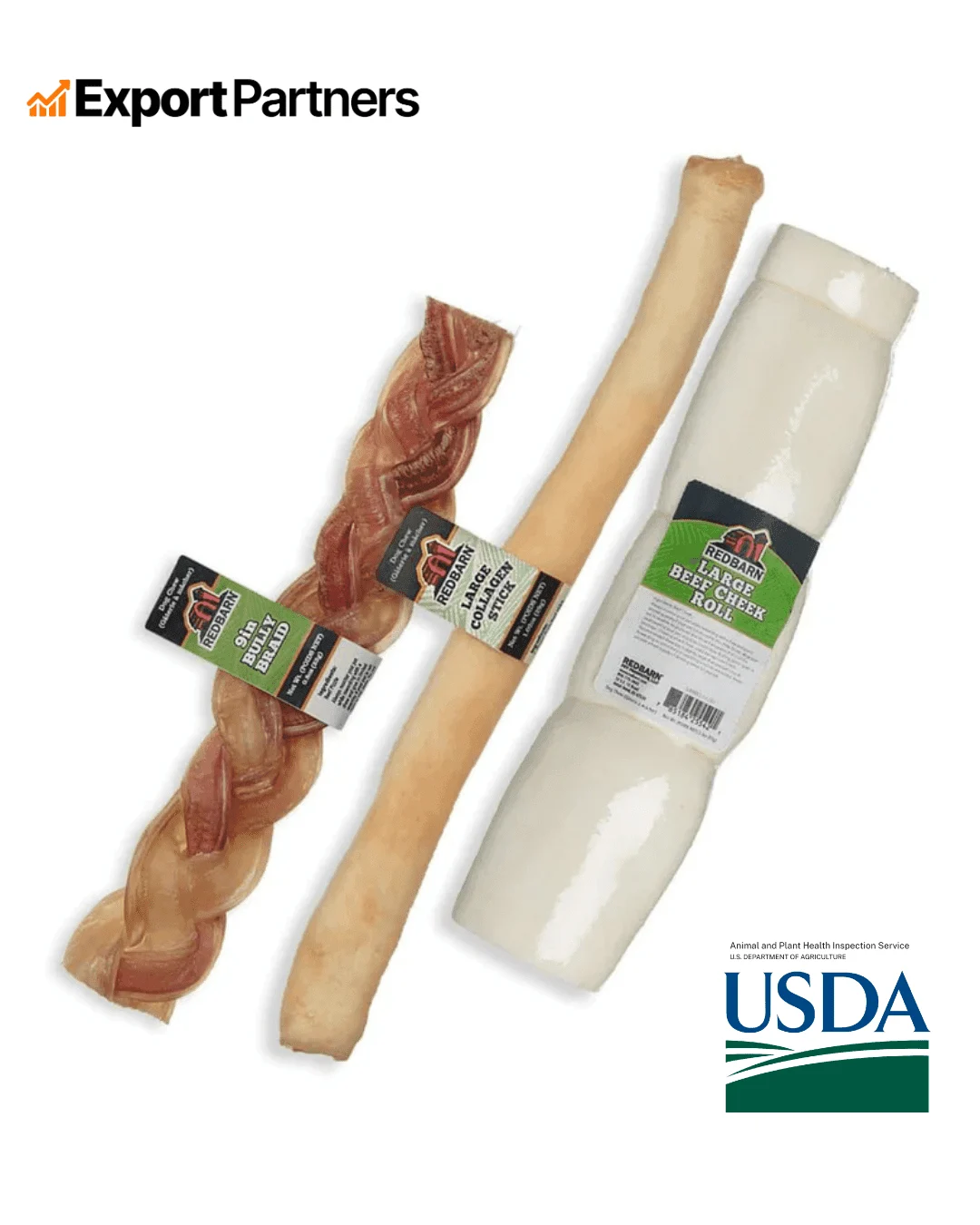
Dog chews
Animal-origin food exports
FDA registration
Customs registration and bond
Why Export Partners?
One team handles both agencies
We stay with you after the permit
US Agent service
Field experience with pet food and chews
Joining our supplier portfolio
Simple invoicing, one dedicated contact
What Does “USDA Certificate” Usually Mean?
What people search for as a USDA certificate is usually one of two different documents, and each comes from a different agency through a different process:
- USDA APHIS permit (VS Import Permit, VS 16-3): the import permit required for products containing animal-origin ingredients such as meat, dairy, eggs, offal or fish oil, as well as pet food and treats, to enter the United States. The application is filed through the APHIS online system; the APHIS VS Permitting Assistant tool shows whether a product requires a permit. This is the service Export Partners provides.
- USDA Organic (NOP) certification: the certification needed to sell a product as “organic” in the United States. USDA does not issue this certificate itself; independent certifying agents accredited by USDA issue it after an on-site inspection and renew it with an annual inspection.
For a product with animal-origin ingredients, a USDA APHIS permit alone is not enough; the facility also needs FDA registration and the product must meet U.S. labeling rules. For pet food and treats, the usual order is: FDA facility registration first, then a label compliant with U.S. rules, and finally the USDA permit application. Following this order keeps the product and facility details in the application file consistent from the start.
Frequently asked questions
No, they are two separate agencies and two separate applications. FDA registers the facility and reviews the label; USDA APHIS reviews the product's animal disease risk and issues the import permit. Products with animal-origin ingredients often need both.
First, the APHIS VS Permitting Assistant tool is used to determine whether the product requires a permit; then an eAuthentication account is opened and the application is filed through APHIS eFile with VS Form 16-3. A veterinary health certificate from the country of origin and the details of a U.S. importer are added to the application.
No. According to APHIS’s own notice, new and renewal applications have been filed through APHIS eFile since May 31, 2022. Content describing ePermits is outdated.
Pet food and chew products with animal-derived ingredients are likely to require a permit. The definitive answer depends on the product type, animal source and degree of processing; we classify the product through the VS Permitting Assistant and confirm the result in writing.
The permit runs through the party importing into the U.S., and the application requires an Importer of Record. The importer of record is your own U.S. company or your U.S. buyer; we handle importer registration and the customs bond on its behalf.
The permit is required but not sufficient on its own. On the customs side, importer registration and a customs bond are needed, and food products also require Prior Notice. If these steps are missing, a shipment may be held even with a permit in place.
Timing depends on the product class and APHIS’s workload at the time; there is no guaranteed figure. In practice, the most common causes of delay are an incomplete product description in the application and a late veterinary certificate.
Yes. The USDA permit can be obtained on its own; FDA registration, label review, customs bond and shipping coordination can be added to the same package as needed.
No. The USDA APHIS permit (VS 16-3) is an import permit that allows an animal-derived product to enter the U.S. USDA Organic (NOP) is a certification for selling a product as organic, issued after inspection by independent bodies accredited by USDA. A non-organic pet food may need an APHIS permit but not an organic certificate; an organic olive oil needs an organic certificate but not an APHIS permit.
For pet food and animal-derived food, the most reliable order is: first the FDA registration of the production facility and the US Agent appointment, then packaging prepared to U.S. labeling rules, and finally the USDA APHIS permit application. Since the permit application asks for facility and product details, settling registration and labeling first keeps the file consistent from the start and reduces the risk of follow-up correspondence.
In the U.S., pet food labels are prepared according to FDA rules and the AAFCO model regulations adopted by most states. The label includes the product name, net quantity, guaranteed analysis (protein, fat, fiber, moisture), ingredient list, feeding directions and manufacturer or distributor information. We can run the label compliance review in the same package as the USDA permit and FDA registration.
Does your product need a permit? We’ll tell you in one day
Send us the product ingredients and target volume; we classify the product and confirm in writing whether a permit is required and, if so, which steps apply. If it is not required, we tell you that up front as well.
Get a quoteGet a quote
Tell us about your product, its animal-derived content and target volume; we reply the same day with a proposal covering the process, steps and pricing.
- Same-day quote, fixed price
- USDA permit alone or as a package
- FDA, bond and shipping from one team
Contact us
E-mail: info@exportpartnersllc.com
U.S.: +1 210 756 2033
Export Partners LLC, 5835 Callaghan Rd, Ste 204-0501, San Antonio, TX 78228, USA