
U.S. and Canada customs procedures, FDA registration and hazmat logistics often come up together in the same shipment. In this article we look at each one separately and show how they connect.
1. FDA Registration and Amazon Sales
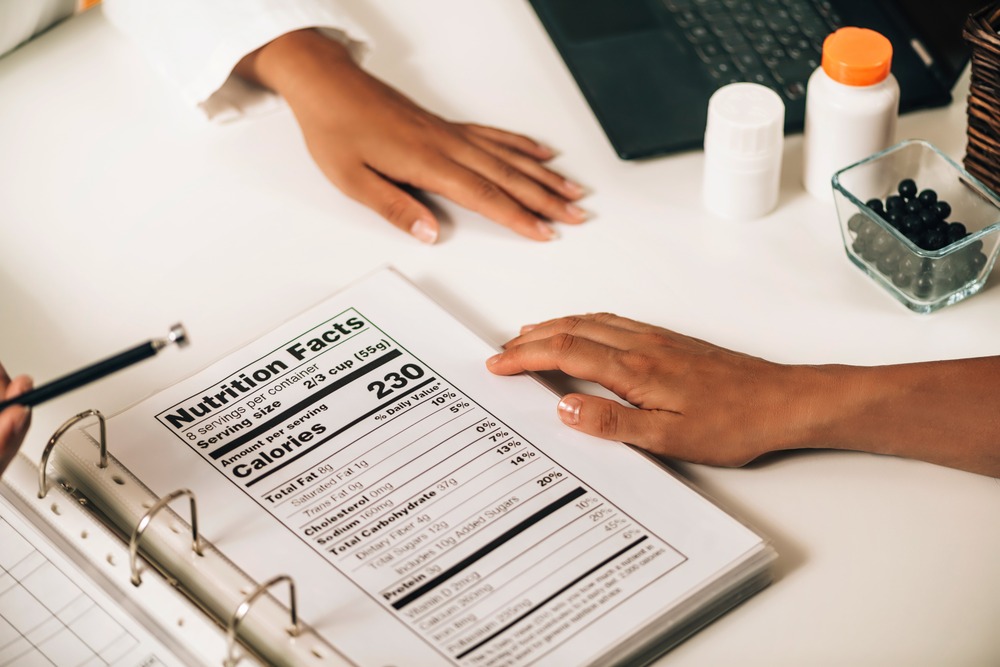
Companies that want to ship food, dietary supplements, cosmetics or medical products to the United States first need to complete their FDA (Food and Drug Administration) registrations. These registrations are required to support ingredient compliance and the accuracy of label information. FDA compliance is essential for selling on platforms such as Amazon and Walmart.
The registration process usually includes the following items:
- Food Facility Registration
- Cosmetic Establishment Registration
- U.S. Agent Service
- Label and Ingredient Review
- FDA Product Listing
We recommend reviewing our FDA Registration and Certification and FDA Process for Selling Food and Cosmetics in the U.S. pages.
2. Hazmat (Dangerous Goods) Logistics
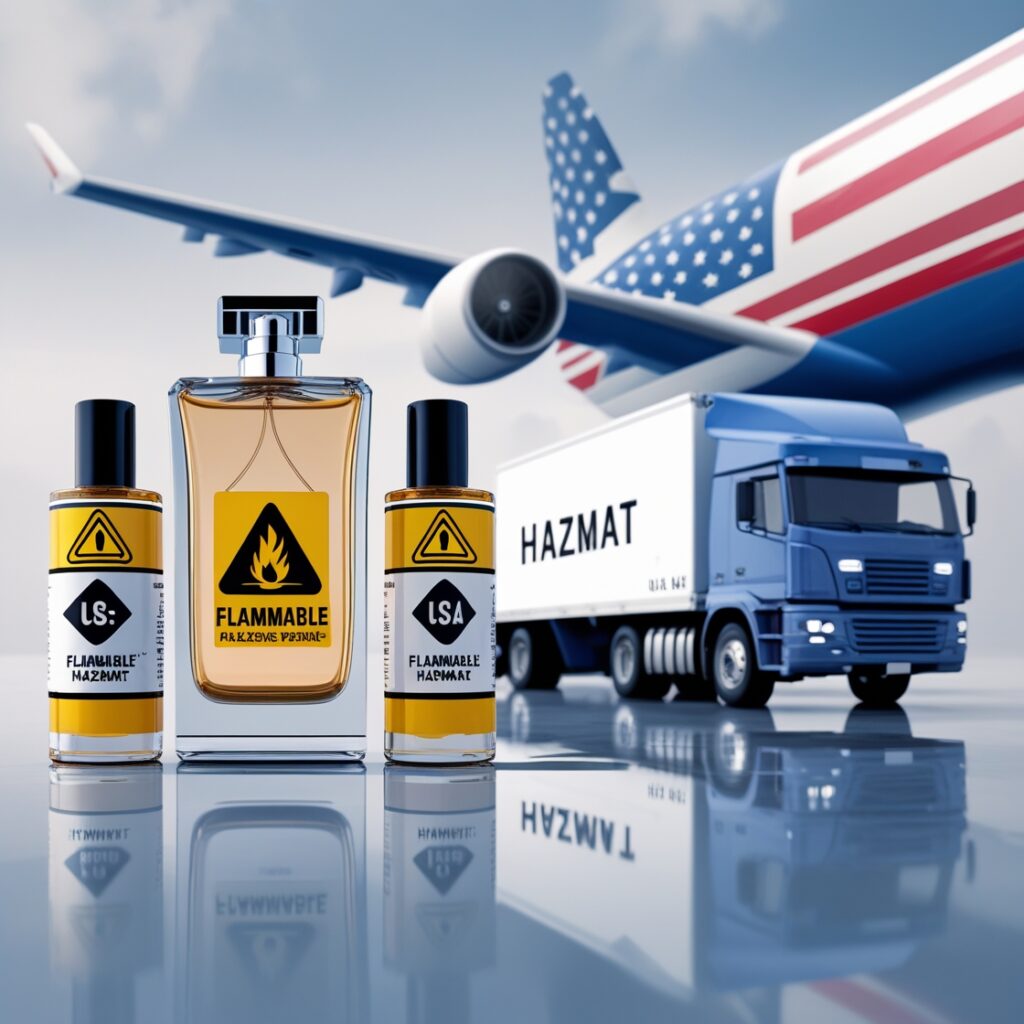
Perfume, aerosol sprays, essential oils and some similar products are classified as dangerous goods (hazmat) in air freight. Many carriers can create difficulties with hazmat shipments. Our logistics partner:
- Offers hazmat-certified transport
- Prepares complete customs declarations
- Completes last-mile delivery within the U.S.
- Moves products in a way that meets Amazon FBA requirements
3. Exporting Food and Cosmetics to Canada
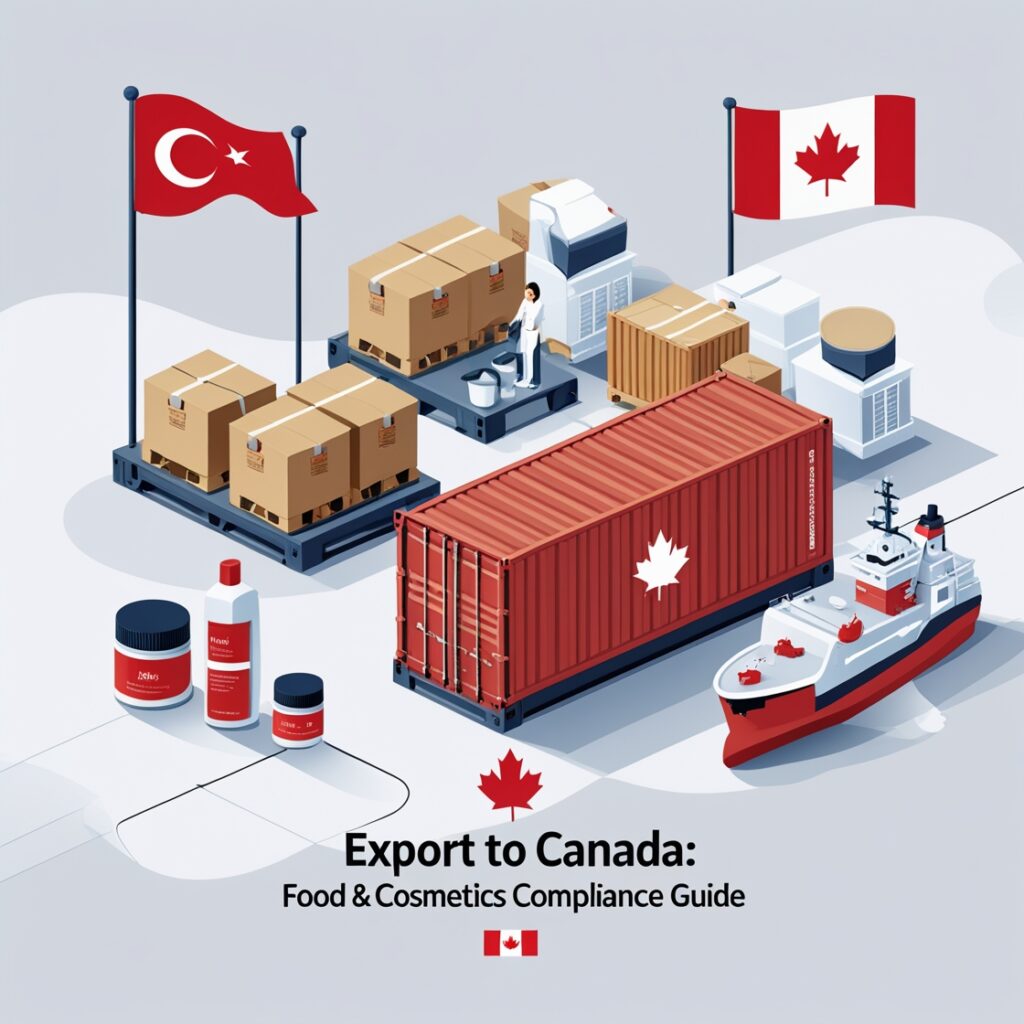
For exports to Canada, authorities such as Health Canada are involved rather than the FDA. Structurally, however, the process works in a similar way. Our partner in Canada supports the following:
- Canada Customs Representation
- Food and Cosmetic Label Review
- Product Compliance Service for Canada
- Product transport and FBA support for Amazon.ca
You may also find our article Exporting Food and Cosmetics to Canada: Compliance and Customs Guide for Exporters useful.
4. U.S. and Canada Customs: Bond, Representative, DDP
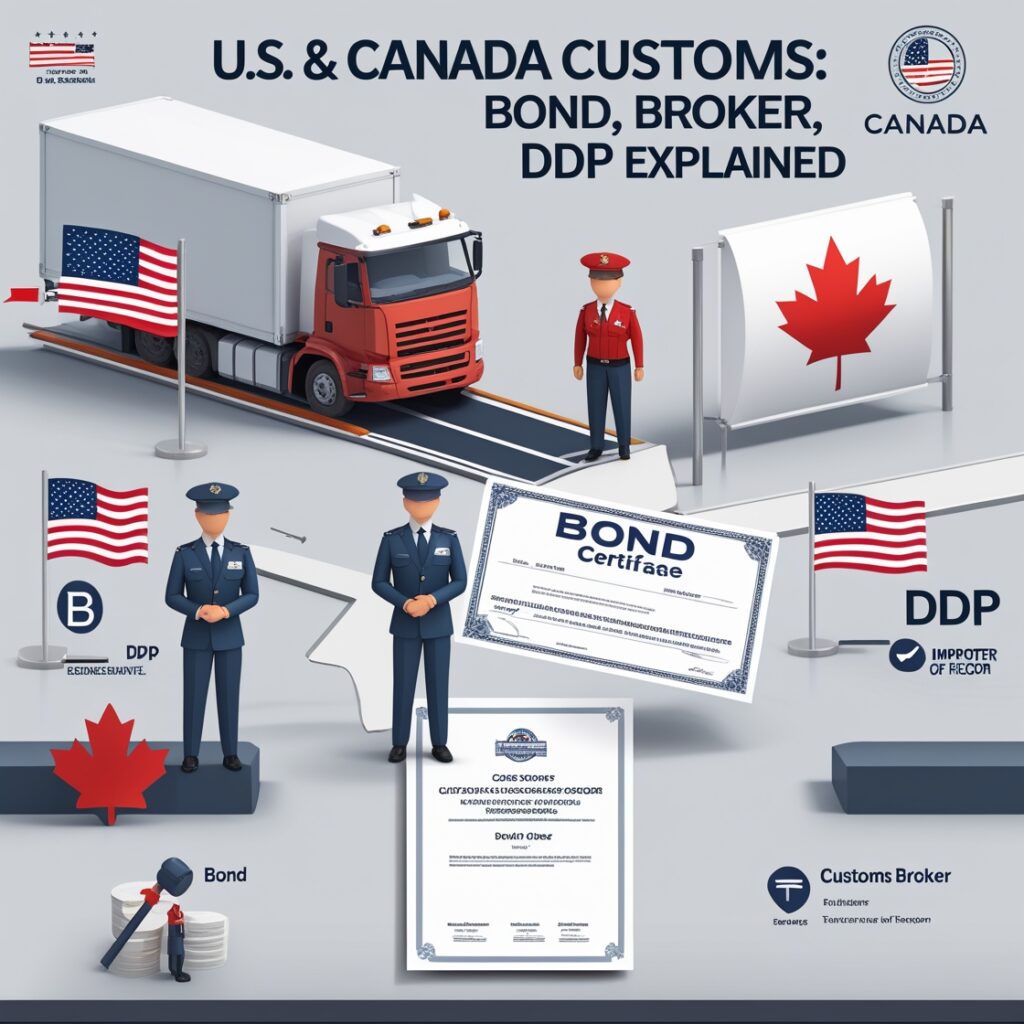
Customs clearance for shipments to the U.S. and Canada should be planned carefully. Having a company established there allows you to pay customs costs directly.
If you do not have a company there, you will need to ship products DDP (Delivery Duty Paid). Under this method, all customs duties and procedures are the shipper's responsibility. For Amazon sellers in particular:
– U.S. shipments under 800 USD used to be duty-free; this exemption was suspended on August 29, 2025 (details below).
– In Canada, duties are mostly charged based on shipment value and product type.
– If needed, a bond can be obtained for ongoing exports.
5. Duties and Tariff Layers on U.S. Shipments Under $800
On August 29, 2025, the duty exemption for shipments under 800 USD was suspended. The suspension applies to all countries, with no country-specific exception. Two CBP interim final rules published on June 24, 2026 made the suspension indefinite (Federal Register 2026-12670 and 2026-12669), and its legal basis is now 19 U.S.C. 1321(b) rather than an executive order. The exemption is removed from the statute on July 1, 2027. Entry Type 86 was also eliminated in this process, so the simplified declaration route used for low-value shipments is no longer available.
The rates have changed as well. The 15 percent reciprocal tariff written about at the time no longer applies. EO 14389, dated February 20, 2026, revoked the additional ad valorem duties imposed under IEEPA (Federal Register 2026-03832). The reciprocal tariff has not been applied since that date. We explain the current tariff layers and how the calculation works step by step in our article on U.S. customs duty calculation for Amazon sellers.
Which additional layers apply depends on the product's country of origin. For some origins, a Section 301 layer of 12.5 percent currently applies (Federal Register 2026-15181, CBP CSMS 69326983). Such a rate is added on top of the product's normal duty rate; it does not replace it. The 150-day period of the temporary 10 percent additional duty under Section 122 ended on July 24, 2026, but there is no primary-source record of it being extended or terminated. It is worth confirming the current status of this item with your customs broker.
Example: on a 500 USD shipment, a 12.5 percent Section 301 layer alone comes to 62.5 USD. The product's own duty rate is added to this, so the total may be higher. If you have a company in the U.S., you can pay this duty directly. Otherwise, with DDP shipments a DDP fee of 25-30€ per shipment is paid to the carrier. This can reduce profitability on small shipments.
The Section 301 layer is based on the finding that the exporting country has not banned imports of goods produced with forced labor. It is not a claim of forced labor in that country's own manufacturing; the two are separate matters.
Food, cosmetics, supplements and home textiles are not covered by the general exemption. The annex lists may include product-level exceptions, so it is safer to check your own HTS code separately.
Contact us today for company formation in the U.S.
Frequently Asked Questions
- Is there an FDA certificate?
No, the FDA does not approve products; it only manages registration and declaration processes.
- Is FDA registration required for Amazon?
Yes, it is required for categories such as food, dietary supplements and cosmetics.
- Can hazmat products be shipped to Amazon?
Yes, with proper packaging and declaration, hazmat logistics is possible.
- Does the FDA have authority in Canada?
No, Health Canada is the competent authority.
- Is customs duty charged on every product?
No, it depends on the product type, value and shipping method.
- Are shipments under 800 USD duty-free?
They used to be, but this exemption was suspended on August 29, 2025 and made indefinite by the CBP rules of June 24, 2026. No country-specific exception applies. The 15 percent rate cited at that time no longer applies today, as the IEEPA reciprocal tariff has not been in effect since February 24, 2026. The layer that is certain today is the 12.5 percent Section 301 duty for countries within its scope, and this rate is added on top of the product's own customs duty. To determine the exact amount, you need to start from your product's HTS code.
Last updated: October 3, 2026

