
Why Food Manufacturers in Türkiye Search Google for ‘Food Bottling’, ‘Private Label Food Packing’ and ‘FDA Registration’
Food manufacturers in Türkiye, especially export-oriented companies, have recently been searching Google for English terms such as “food bottling”, “food packing” and “private label food packaging”. What is behind these searches? In many cases, the answer leads back to FDA registration for food manufacturers in Türkiye. In this article, we look at why manufacturers in Türkiye search for these concepts in English, which goals lie behind those searches, and which product groups and problem areas come up most often. We also cover what these companies need in areas such as FDA compliance, labeling requirements, logistics and private label production. Our aim is to offer practical guidance for manufacturers who want to enter the U.S. market.
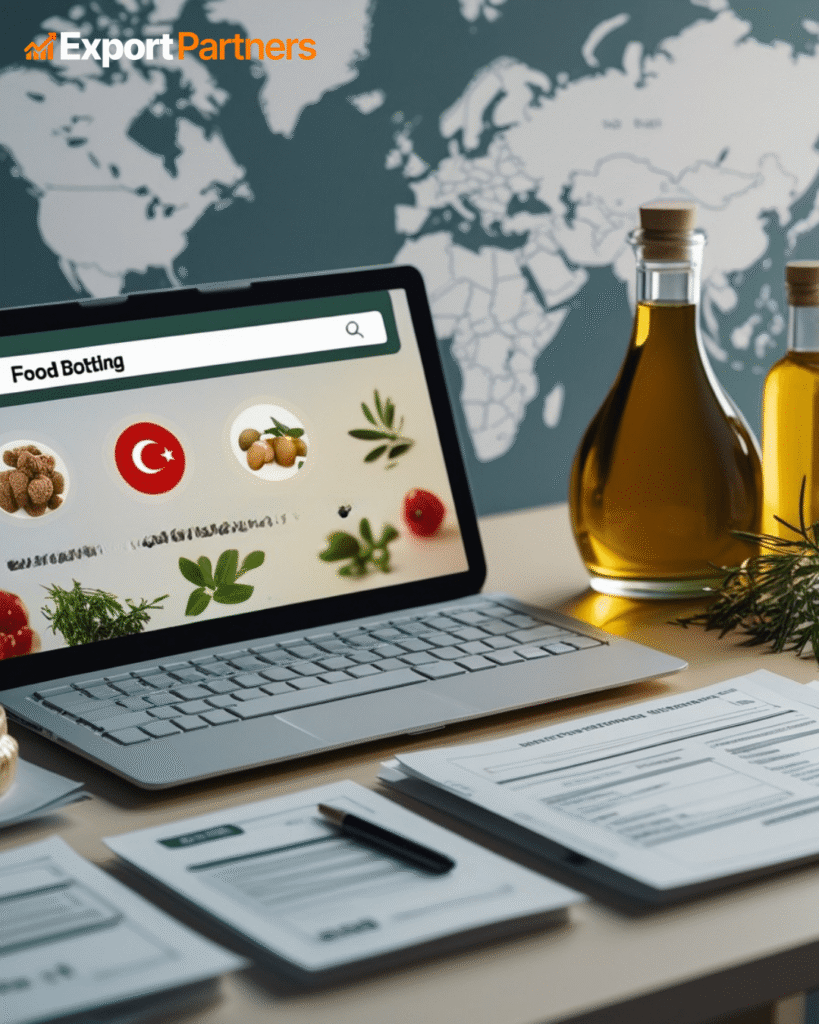
Food manufacturers in Türkiye and FDA registration: why they search in English
First, manufacturers in Türkiye tend to search for information in English because their target markets are global, and the U.S. market in particular. Searching in English makes it easier to reach international sources and foreign regulations directly. For example, a company planning to sell abroad through Amazon, or someone who wants to set up a company abroad, learns and researches the terms in English because the platform itself operates in English. Content on Amazon sales and logistics is also mostly in English, so searching with these terms makes sense. Indeed, the strict rules for selling food on Amazon also include the requirements of U.S. agencies such as the FDA. As a result, a manufacturer who wants to understand these requirements often searches for English phrases like “FDA food labeling requirements” to find accurate information.
Another reason is that some technical concepts have no exact Turkish equivalent, or the industry simply uses the English terms. “Food bottling” and “food packing” appear frequently in international literature, especially in food processing and packaging. Manufacturers in Türkiye may use these English terms when, for example, they are looking for a new bottling machine or researching packaging methods that can extend shelf life. In short, searching in English gives companies access to a richer pool of content and helps them follow global practices.
Also, click to read our private label guide.
Target Market: the U.S. and Selling on Amazon
For many food manufacturers in Türkiye, the ultimate goal is to bring their products to the United States market and win a share of this very large market. In recent years, the U.S. has become an increasingly important destination for food exporters in Türkiye. Between 2019 and 2023, Türkiye's food exports to the U.S. grew by more than 100%, rising from 708 million dollars to 1.712 billion dollars. Building on this momentum, the food sector in Türkiye has set a target of 5 billion dollars in annual exports to the U.S. To work toward this goal, companies attend food trade shows in the U.S., promote their products and study the requirements of the U.S. market closely.
Between 2019 and 2023, Türkiye's food exports to the U.S. grew by more than 100%, rising from 708 million dollars to 1.712 billion dollars. Food exporters in Türkiye aim to build on this success and have set an export target of 5 billion dollars to the U.S. As part of this effort, many products such as nuts, dried fruit, seafood, legumes, olives, olive oil, sun-dried tomatoes, spices, herbal teas and coffee were showcased as flavors of Türkiye at the Summer Fancy Food Show in New York.
When it comes to the U.S. market, one of the first topics that comes up is Amazon. Because Amazon offers access to millions of customers in the U.S., it has become a popular sales channel among manufacturers in Türkiye. Global online grocery retail continues to grow, and Amazon is one of the leading channels in this space. Services such as Fulfillment by Amazon (FBA) make logistics easier, while Amazon’s broad customer base can increase sales potential. However, to sell food on Amazon, sellers first need to complete Amazon’s approval process and meet its requirements. For example, sellers who want to sell food in the U.S. are generally expected to prepare FDA and USDA documentation, ingredient and nutrition labels, expiration dates and packaging information. This means manufacturers in Türkiye often need detailed knowledge of FDA requirements, labeling and packaging. As a result, the goal of entering the U.S. market and selling on Amazon leads many manufacturers to research these topics in depth using English terms.
Which Product Groups Are Interested in These Terms?
Companies in Türkiye searching for English terms such as “food bottling/packing” and “private label packaging” are usually businesses that produce food products and plan to package and export them. The following product groups stand out in particular:

- Honey: Türkiye is a significant player in global honey production and exports. In the first 9 months of 2024, 5,913 tons of honey were exported to 49 countries, led by the U.S., Germany and Canada, generating 22.9 million dollars in revenue; during this period the U.S. was the largest buyer (approximately $9.3 million). Honey producers aim to bottle their products in glass jars and package them properly for shipment to the U.S. At this point, leak-proof lids, sturdy packaging and accurate labeling become critical. For example, sealed lids and leak-proof packaging materials should be used so that honey jars do not leak during transit. In addition, honey labels should clearly state the net weight (in both grams and ounces), the country of origin and the manufacturer information. Since honey is a natural product, there is generally no additional restriction in the U.S., although warnings such as not giving honey to children under 1 year of age may appear on consumer labels in the U.S. market. Honey producers searching for “food bottling” may be trying to learn about the machinery or techniques needed to bottle and seal food products correctly. Searches for “private label food packaging” may also come from producers looking to meet private label packaging requests from foreign distributors who want to sell Turkish honey under their own brand.

- Olive Oil: Olive oil holds an important place among Türkiye’s export products. FDA registration is required for this product as well in order to enter large markets such as the U.S. In addition, before olive oil enters the U.S., Prior Notice must be submitted to the FDA for each shipment. Olive oil producers searching for “food packing” are likely aiming to package their products safely in glass bottles or tins, ensure they are leak-proof, and prepare labels according to U.S. standards. An olive oil label that complies with U.S. regulations should include details such as an accurate and complete ingredient statement, manufacturer or distributor information, net quantity (in both metric and U.S. units, for example 500 ml / 16.9 fl oz), a Nutrition Facts panel and the product name. If cholesterol or other health-related claims are made, FDA rules should be followed very carefully; incorrect health claims may lead to the product being classified as a “drug” and refused. Since olive oil is usually sold in glass bottles, protective packaging against breakage is very important. For this reason, producers can take precautions such as wrapping bottles in bubble wrap and using separators inside cartons before shipping. As for “private label packaging,” many olive oil companies in Türkiye supply products under the brands of retail chains or private customers abroad. Under this private label production, it may be necessary to print labels carrying the customer’s logo and sometimes to source different types of bottles or tins. Indeed, some long-established olive oil producers offer the private label process as an integrated service, covering Packaging and Branding: custom packaging and branding details for your products and Distribution and Logistics: a reliable logistics network for distributing your products worldwide.

- Jams, Sauces and Similar Processed Foods: Processed food products such as jams, marmalades, grape molasses (pekmez), pickles and sauces can also find a niche in the U.S. market. Many of these products are sold in glass jars or cans. A jam producer searching for “food bottling” may be looking for information on pasteurization, jar vacuum sealing and choosing the right lids. For exports to the U.S., the FDA also has specific safety standards for high-acid foods of this type. On the labeling side, information such as the ingredient list, sugar content, net quantity and manufacturer address should be written in English on the jam jar. A Nutrition Facts panel is also information that must be provided to consumers in the U.S. (for example, how many grams of sugar the product contains per serving). Jam and sauce producers also need to pay attention to shelf life; platforms such as Amazon require the expiration date to appear clearly on the label and the product to have sufficient remaining shelf life when it is shipped. Companies in this sector searching for “private label food packaging” are looking for opportunities to offer private label production for distributors who want to sell jam under their own brand abroad. This may mean tailoring the design to the customer, perhaps using a different jar shape or packaging design.
- Nuts and Dried Fruits: Products such as hazelnuts, pistachios, dried figs, dried apricots and raisins are both traditional export items for Türkiye and products in demand in the U.S. These products can often be sold in bulk, but retail requires custom packaging. When manufacturers search for “food packing”, they may be looking into vacuum packaging and modified atmosphere packaging (for example, techniques such as nitrogen flushing for longer shelf life. In dried fruit exports, even countries like Vietnam list zip-lock pouches, nitrogen-flushed foil bags and pouches with a clear window among their packaging options for the global market. Similarly, Turkish dried fruit and nut producers look for packaging that will preserve freshness, help prevent insect infestation and keep the product easy to use after the package is opened. For example, many use zip-lock (resealable) pouches for nut packs or add a secondary outer carton for protection. Packaging durability matters for shipments to the U.S., because a torn package during long transit can mean lost product. On the labeling side, allergen statements are especially important. In the U.S., peanuts and tree nuts such as walnuts and almonds are classified as major allergens, and the package needs a statement such as “Allergen: Tree Nuts”. Private label demand is very common in this sector, since large grocery chains and brands want to sell Turkish nuts in their own packaging. Turkish companies offer flexible production to meet this demand. For example, a nut producer offering private label service can take logo and design files from the customer and produce printed packaging; a minimum order quantity of around 1,000-2,000 units per product is typical. The process may also involve details such as providing the artwork in AI/PDF format and setup fees for new packaging tooling. This explains why manufacturers search for “private label food packaging” and research the topic in depth.

- Tea and Spices: Turkish tea, herbal teas and spices also attract interest in the U.S. ethnic food market and the gourmet segment. Turkish herbal teas and spices are even featured in the Aegean Exporters' Associations' “Turkish Tastes” promotions. Manufacturers who want to ship these products to the U.S. may face some challenges in packaging and labeling. For example, if an herbal tea is sold with a health claim (such as “promotes relaxation, supports restful sleep”), it may fall under U.S. dietary supplement rules and be subject to FDA oversight. For this reason, most manufacturers avoid health claims, present the product as a food and prepare the label accordingly. A “food packing” search can point tea and spice companies to the right package type: aluminum foil pouches that preserve aroma, multilayer packaging that keeps out moisture, or small tins. Since glass jars are also used for spices, closure security and sealing matter, just as with jams. Labels should include the product name, net quantity (for example 100g / 3.5oz), country of origin (Türkiye), importer details (the U.S. distributor) and any usage recommendations. Under private label, for example, when an American spice retailer wants to sell Turkish spices under its own brand, the Turkish producer can supply the product with a custom label and perhaps a different box design. This is why manufacturers research “private label packaging” trends and examples.

Beyond the products listed above, a range of processed foods such as Turkish coffee, cocoa products, ready meals and sauces are in a similar position. The common thread is that they need to rethink their packaging and labels to enter international markets. Let's take a closer look at the topics these companies need most.
FDA-Compliant Production and Label Design
For any manufacturer aiming to enter the U.S. food market, two of the most important topics are FDA compliance and correct labeling. The FDA (U.S. Food and Drug Administration) requires food, beverages, dietary supplements and drugs entering the U.S. to go through specific registration and notification processes. For Turkish manufacturers, this means registering their facilities with the FDA as a foreign food facility and designating a U.S. Agent. For example, FDA registration is mandatory for olive oil facilities and must be renewed periodically; a company located outside the U.S. needs a representative based in the U.S. This U.S. Agent manages communication between the FDA and the company and makes potential inspections easier to coordinate. In addition, before a food shipment is sent to the U.S., an electronic prior notice must be submitted to the FDA system; otherwise the shipment may be held at the border. These are complex procedures that manufacturers can find difficult to handle on their own, and working with a service provider is often helpful.

On the labeling side, U.S. food labeling regulations (21 CFR Part 101) are quite detailed. A non-compliant label may keep your product off store shelves, and inaccurate statements may even lead to legal action. In general terms, the basic information a compliant food label for the U.S. market should include is as follows:
- Product name (the common name of the food, such as “Extra Virgin Olive Oil” or “Flower Honey”),
- Ingredient list (ingredients in descending order by weight, along with allergen declarations),
- Net quantity (in both metric and U.S. units, for example “Net Wt. 500g (1.1 lb)” or for liquids “500 ml (16.9 fl oz)”),
- Nutrition Facts panel (serving size, calories, fat, carbohydrates, protein and vitamin/mineral information, in the format set by the FDA),
- Name and address of the manufacturer, packer or distributor (the name, city and country of the company marketing or importing the product in the U.S.; for foreign manufacturers, the country of origin should also be stated),
- Country of origin (for example, the statement “Product of Türkiye”).
The placement of this information on the label is also regulated. The FDA expects at least the product name and net weight to appear on the front of the label (Primary Display Panel), while the Nutrition Facts panel, ingredient list and company information are generally expected together on the back (Information Panel). The regulations even define details such as the net weight statement appearing in the lower part of the front panel, with specific type sizes and spacing. In short, label design is not only a visual task but also a regulatory compliance task.
To learn and apply these requirements, manufacturers in Türkiye often search in English for terms such as “FDA food label requirements” or “what should a US nutrition facts label look like”. For example, in a blog post or guide they may find a statement such as “labels on food products exported to the U.S. should include an accurate and complete ingredient statement, manufacturer information, net weight, nutrition information and the product name.” Service providers in this field also highlight these points in their published articles. Behind this search lies the concern of presenting the product's shelf credibility and the information it gives the consumer correctly. Incorrect labeling can put at risk not only the consumer but also the manufacturer's reputation in the U.S. Platforms such as Amazon also specifically state the English labeling requirement: under federal and state laws, they require that all products be labeled in English and that products be safely packaged and sealed
In addition, certification topics are also on manufacturers' radar. For example, if they plan to sell organic products, a USDA Organic certification may be needed; for meat products, USDA approvals; and if they target a halal market, documents such as a Halal certificate can become important. Halal or Kosher certificates are not a legal requirement for shipping food to the U.S., but they can be a deciding factor for certain consumer segments in the market. Manufacturers therefore also prepare documents such as ISO 22000, HACCP, the FDA registration record and organic certificates for their products. Such documents may also be requested in an Amazon application. For example, when granting approval to sell food, Amazon is known to sometimes ask the manufacturer for a Food Production Permit, sample product labels and, where applicable, FDA registration.
Key Points in Logistics and Shipping
When preparing products for the U.S. market, logistics planning also plays a large role behind the scenes. Manufacturers consider “food packing” not only as the product's retail packaging but also as packaging for shipment. However good the product is, if it is damaged or spoils in transit because of poor packaging, the effort may be wasted.
Shipping Method: For small-volume shipments that need to arrive quickly, air cargo or couriers (such as DHL and FedEx) are generally used. In this case, sturdy packaging is critical, because packages in air cargo are handled frequently and should withstand drops. For larger-volume exports, ocean container shipping is preferred; this means products are stacked and palletized inside the container and exposed to transit conditions for a long time. Since temperature and humidity can change at sea, if the product is prone to condensation, melting or spoilage, it may be necessary to use in-container temperature control (for example, a refrigerated container) or desiccant packs.
Shipping to Amazon FBA: For manufacturers selling on Amazon, the logistics process works a little differently. Products are sent not directly to customers but to Amazon's fulfillment centers. Amazon's fulfillment centers also expect certain standards at receiving: each unit should carry a scannable UPC/GTIN barcode, each carton should carry Amazon's shipping label, and palletized shipments should follow Amazon's pallet rules. Another important point: for products with a shelf life (expiration date), Amazon requires a certain minimum remaining shelf life (usually 3-6 months) when the product enters the fulfillment center. As a policy, Amazon requires that the expiration date on all food products with an expiration date be printed permanently on the packaging and visible to the fulfillment center. For example, jars or packages of products such as honey, jam and nuts should have the expiration date printed in day/month/year format; printing it directly on the packaging is preferred over a label applied later.
Safe Packaging: Let us explain with a few examples the precautions manufacturers can take to keep products from being damaged in transit: For products in glass packaging (honey, olive oil, pickles, etc.), it is standard practice to wrap each unit in bubble wrap and then place them in cartons. To keep products from knocking against each other inside the carton, cardboard dividers are placed between them or empty spaces are filled with materials such as foam or air cushions. For liquids, placing each jar in a separate leak-proof bag adds extra protection against leaks (U.S. customs sometimes recommends this as well, so that a leak does not contaminate other cartons). If foods prone to melting, such as chocolate or Turkish delight, are shipped in summer, cold chain solutions or insulated boxes with dry ice packs may be needed. For products such as nuts, using vacuum packaging plus oxygen absorbers extends shelf life and reduces the risk of pests. For all food products, the package should be sealed (unopened) and free of any holes or tears, so that there is no risk of contamination.
Customs and Documents: Shipping food to the U.S. is subject not only to U.S. regulations but also to customs procedures on departure from Türkiye and on entry into the U.S. In addition to standard export documents (commercial invoice, packing list, bill of lading, etc.), exporters should prepare product-specific certificates. For example, honey exports typically require an Analysis Report approved by the Ministry of Agriculture (showing the honey is free of residues, antibiotics and similar substances). Dried fruit may require a fumigation certificate or a phytosanitary certificate (documenting that the product is pest-free and meets plant health requirements). A label sample is another document that can be attached to the customs declaration; U.S. customs may inspect the product when needed and check whether the label complies with regulations. Under the FDA Prior Notice system mentioned above, the exporter submits details such as the product, number of cartons, gross weight and carrier online for each shipment and receives a Prior Notice confirmation number. This number is written on the shipping documents so that U.S. customs can see the FDA notification when the goods arrive.
Another common mistake in the logistics process can be packaging language mismatch. Some sellers, especially those selling on Amazon, ship the Turkish-language version of a product sold in Türkiye and run into problems. If a product listed on Amazon US shows English packaging, the consumer expects to see the same language when the package arrives. Otherwise, they may complain that they received a different product. In fact, sellers who source products from Türkiye and sell them on Amazon often see the warning the packaging in the U.S. is in English, yours may be in Turkish; even when the packaging is in English, small visual differences can lead to customer complaints. In such cases the customer returns the item, the seller takes a loss and the Amazon account may be negatively affected. For this reason, if exporting manufacturers plan to ship the product in its final packaging, they should make sure the label is 100% in the target language and the design looks as expected. If needed, professional translation and design support can be used at this stage to prepare an English version of the existing Turkish label, followed by a label review to check compliance with FDA rules.
Service Needs: How Can Manufacturers Get Support?
In light of the information above, it is clear that entering the U.S. market brings a food manufacturer many new topics to handle. Export regulations, FDA registration, label design, logistics planning and Amazon management together call for a wide range of knowledge and skills. This is usually the point where these companies look for outside support and services.
1. Cross-Border E-Commerce and Market Services: Manufacturers that want to export food to the U.S. can first get expert support on market research, competitor analysis and pricing. For example, as an Amazon-approved service provider, Export Partners Türkiye develops e-commerce strategies in the U.S. for Turkish brands, and we offer Amazon management services covering the right category selection and product listings. Service providers like this help the manufacturer choose the most suitable market entry method for its product and goals (B2B distribution, Amazon/B2C sales, or sales through its own website).

2. FDA and Regulatory Compliance Services: FDA registration and labeling regulations are quite technical. For this reason, companies often work with service providers that specialize in FDA matters. These services usually cover steps such as registering the facility with the FDA, providing U.S. Agent service and reviewing the product label against FDA guidelines. For example, a provider collects the company's production details and registers it in the FDA system so that it receives an FDA registration number, which is needed for export. There are also professionals who review your label draft and suggest corrections, pointing out missing information or incorrect wording. In some cases, laboratory analyses of the product (e.g., nutrition values) may also be needed, which requires working with food laboratories. Since learning all of these processes alone takes time, many companies prefer to leave the work to experienced providers.
3. Private Label and B2B Connections: A company that wants to do private label manufacturing can get support in finding overseas customers and preparing the packaging they require. In this area, there are export service providers that help with participating in international trade fairs, finding buyers and preparing price quotes. After an agreement is made, contract and quality assurance processes are also critical; for example, a foreign buyer may say "my brand will be on the label, but you must also have an FDA registration," or may provide technical specifications for the packaging material. Turkish manufacturers sometimes need translation and technical support to understand and apply these requests correctly. For example, language localization (translating the label into the local language) and adding barcodes are standard requests in private label work.
4. Logistics and Warehousing Services: Shipping products to the U.S. requires a reliable logistics partner. Manufacturers work with logistics companies to get freight quotes, choose the right shipping mode (air vs. sea) and handle customs procedures smoothly. Topics such as cold chain, LCL (partial) loads and warehousing may come up here. Those selling on Amazon also need a U.S. domestic logistics plan: they will either use Amazon FBA or partner with a 3PL (third-party logistics) warehouse and ship to end customers from there. Export-focused companies such as Export Partners help manufacturers manage this process by connecting them with partner warehouses and carriers. Shipping to Amazon FBA in particular calls for experience in creating shipment plans and palletizing and labeling products in the format Amazon requires; service providers can work with the manufacturer's team on these steps to help shipments go through without errors.
5. Brand and Marketing Support: Finally, let's say your product is packaged and on its way. To stand out on U.S. store shelves or in Amazon search results, it may also need marketing support. While this step falls outside the scope of this article, taking a holistic view, it is clear that manufacturers will also need guidance on digital marketing, advertising and influencer partnerships. Amazon advertising (PPC) management, product page optimization and review management in particular can call for professional support
Conclusion:
In short, it is no coincidence that food manufacturers in Türkiye search for English terms such as “food bottling”, “food packing” and “private label food packaging”; these searches reflect their effort to expand into global markets and especially to gain a foothold in the U.S. Challenges faced when entering the American market, such as FDA regulations, label updates, logistics planning and selling on Amazon, push companies to research in depth. From honey to olive oil, from nuts to tea, many players in the sector are trying to learn how best to package and present their products and how to reach American customers.
Of course, this process also comes with challenges. Strict regulations, intense competition and cultural market differences call for strategic thinking at every step. For example, for new sellers on Amazon, even packaging that is not in English can become an issue and may lead to returns. That is why it is important for businesses starting their export journey to get the right guidance.
As Turkish manufacturers put into practice what they learn through English searches, they can move faster and with more confidence if they also turn to expert support. Whether it is FDA registration and label review or opening an Amazon store and setting up logistics, having a partner to consult at every stage speeds up the process. Export service providers such as Export Partners Türkiye step in at exactly this point and draw up a roadmap for manufacturers. Companies like this, verified as Amazon service providers, offer support across a wide range, from account management to trademark registration, from logistics to digital marketing.
Remember, proper packaging and labeling is not only a legal requirement; it is also your brand's showcase. When customers abroad pick up your product, they receive a message of trust from the package to the label. Start preparing now so you can deliver that message as effectively and compliantly as possible. We hope your research journey, which starts with English terms, becomes the first step toward your international success. We are ready to support you at every step with our experience.
# food bottling
private label food packaging
FDA food label example
food packaging FDA requirements
FDA approved packaging
food export to USA
label requirements for USA food export
barcode for food export USA
FDA nutrition label format
USA food label format
Last updated: October 2, 2026

