
Exporting coffee to the U.S. means entering one of the world’s largest coffee markets. Competition is intense: large roasters, bean suppliers from Latin America and Africa, and boutique brands in every city share the same shelf. Coffee roasted at origin, especially specialty styles such as finely ground cezve-style coffee, can still claim its own place on that shelf; fine grinding, a distinctive preparation method and gift packaging make up a category that is recognized in U.S. ethnic grocery stores and in online sales.
The regulatory side is simpler than it looks. In the U.S., coffee is considered a food and is subject to the FDA’s general food rules; no additional product permit or license is required. Problems usually come not from the rules themselves but from their sequence: a shipment is planned before facility registration is completed, the label is printed in the home-market format, or a flavored product goes out without the Nutrition Facts panel it needs. In this article, we walk through the steps for whole bean, ground and cezve-style coffee in order.
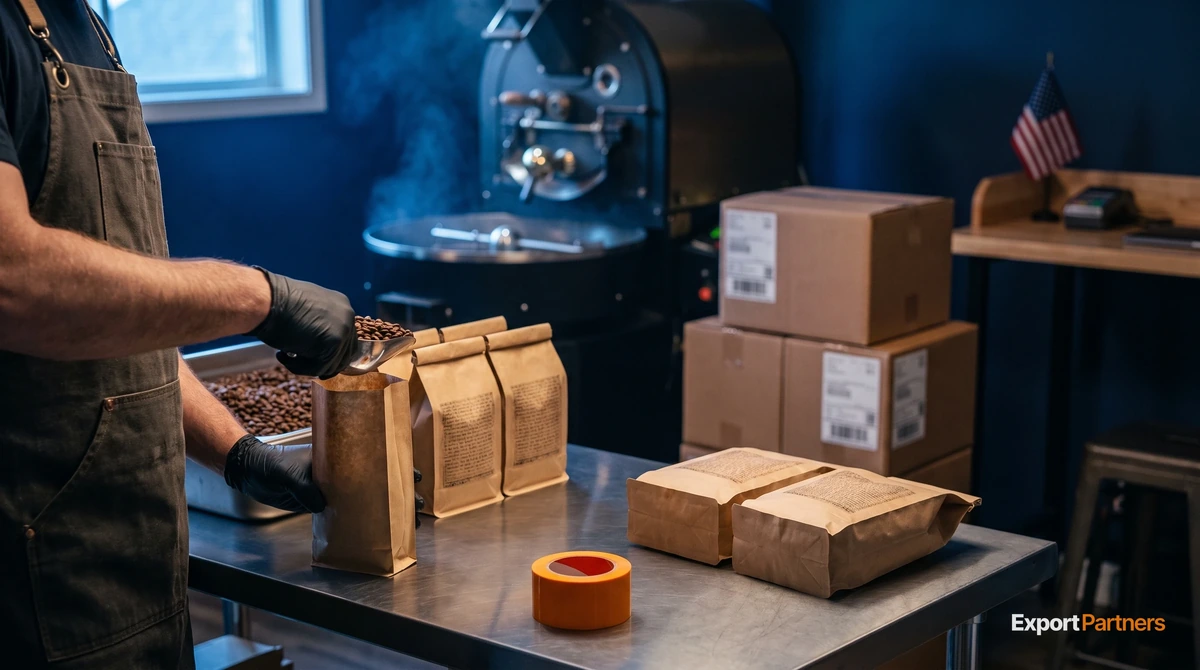
Which agency regulates coffee in the U.S.
In the U.S., coffee is a food under the jurisdiction of the Food and Drug Administration (FDA). Raw green beans, roasted beans, ground coffee and cezve-style coffee all follow the same general rules. Coffee is not among the products that require a USDA meat, dairy or plant health permit, so no separate import permit is needed, unlike animal products.
If the product is flavored, sweetened or a blend with other ingredients added (such as mastic-flavored or cardamom-flavored coffee, or ready-made mixes with milk and sugar), it still falls under FDA jurisdiction, but the labeling requirements increase. We cover this difference separately in the labeling section.
Step 1: FDA facility registration and US Agent
The facility that roasts, grinds, packs or stores the coffee must be registered with the FDA. Registration belongs to the facility, not the product; if several products ship from the same facility, one registration is enough. Registration is free, but it must be renewed between October and December of even-numbered years; a registration that is not renewed is considered invalid.
Along with the registration, a U.S.-based agent (US Agent) is designated. When the FDA has a question or plans an inspection, it contacts this agent first. If the exporting company is a trader rather than the manufacturer, the registration must be made in the name of the facility that roasts and packs the product.
Step 2: Prior Notice for every shipment
Facility registration is done once, while Prior Notice is submitted again for every shipment. Before the goods arrive in the U.S., the FDA is informed of what the product is, which facility it comes from, who is importing it and by which mode of transport it is arriving. The notice deadline varies by mode of transport; a missing or late notice can lead to the goods being held at the port.
Prior Notice is also required for courier and express shipments; being a sample or a small package does not remove this requirement.
Step 3: Labeling
The label of packaged coffee sold in the U.S. generally includes the following:
- Product name: an English name that accurately identifies the product, such as “Ground Coffee” or “Whole Bean Coffee”
- Net quantity: U.S. units (oz) and metric units (g) together, in the lower part of the front panel
- Name and address of the manufacturer, packer or distributor
- Ingredient list: a single ingredient for plain coffee; for flavored products, all ingredients in descending order of weight
- Allergen statement: if the blend contains allergens such as milk or hazelnuts
- Country of origin: where the product was made, in English
The nutrition table used in your home market is not valid in the U.S. This needs to be resolved before printing; if it is noticed later, label costs can double. For label details, see our article on U.S. labeling rules.
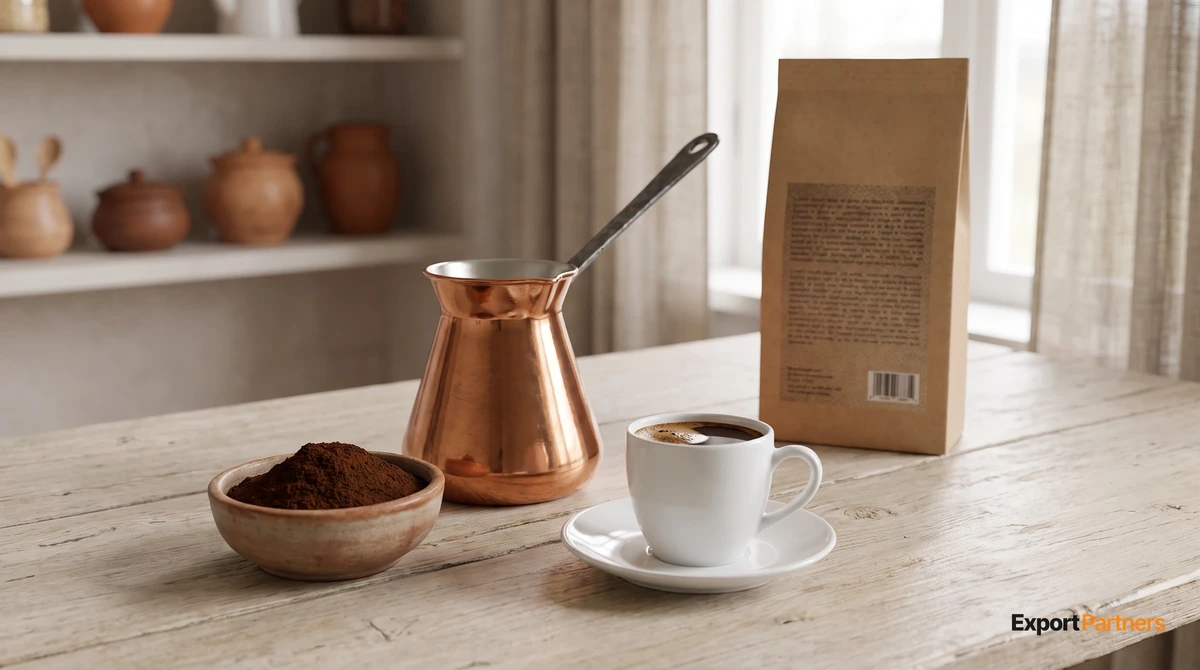
Nutrition Facts: exempt for plain coffee, required for flavored coffee
In the U.S., the Nutrition Facts panel is mandatory for most packaged foods. However, products with insignificant nutritional value are exempt from this requirement, and plain coffee (whole bean or ground, with no additives) falls into this category. This means a package containing only roasted coffee may not need a Nutrition Facts panel.
Exemptions may no longer apply once sugar, milk powder, creamer or flavoring ingredients are added to the product. For ready-to-use blends and sweetened coffee packets, it makes more sense to prepare a U.S.-format Nutrition Facts panel. If the label carries a health or nutrient claim (such as “rich in antioxidants”), the exemption is also lost.
Step 4: The U.S. importer’s FSVP obligation
The company importing the product into the U.S. must document, under the Foreign Supplier Verification Program (FSVP), that its supplier meets food safety requirements. In practice, this means the importer will ask you for documents: facility registration, food safety system (HACCP or similar), lab analysis reports and raw material traceability.
A supplier that has these documents ready from the start tends to look less risky to a U.S. buyer. For coffee, buyers may specifically ask for mold toxin (ochratoxin A) and foreign matter analyses.
Step 5: Tariff code and duties
Coffee is classified under heading 0901 of the U.S. tariff schedule, with subheadings for unroasted and roasted, caffeinated and decaffeinated coffee. The general duty rate for this heading is zero. Ready-to-use blends and coffee-based preparations may fall under different headings, so it is worth determining the correct code together with your customs broker.
On additional duties, Executive Order 14360, published in November 2025, exempted a group of agricultural products, including coffee, from reciprocal additional duties. The exemption list works at the eight-digit tariff code level, and U.S. duty decisions change often. It makes more sense to have a customs broker confirm the current status of your product code before shipment.
Selling coffee on Amazon
On Amazon US, coffee is sold in the Grocery and Gourmet Food category. This category requires expiration date tracking, labels that comply with U.S. rules and, in some cases, category approval. For food shipped through FBA, the expiration date is expected to be legible on both the carton and the product.
Specialty and traditional coffees are searched on Amazon both as gift sets and as everyday packs. Competition often comes less from the big brands and more from other imported brands; a clear brewing description on the product page, a set option that includes a traditional coffee pot, and the right keywords can make a difference.
What to do, in order
| Step | Step | When |
|---|---|---|
| 1 | FDA facility registration and US Agent appointment | Before planning the shipment |
| 2 | U.S.-format label (Nutrition Facts panel if required) | Before printing |
| 3 | Confirmation of tariff code and duty status | Before quoting a price |
| 4 | FSVP document file for the importer | With the first order |
| 5 | Prior Notice | With every shipment, before arrival |
Frequently asked questions
Is FDA registration required to ship coffee to the U.S.?
Yes. The facility that roasts, grinds, packs or stores the coffee must be registered with the FDA and must appoint a US Agent.
Is a Nutrition Facts panel required for plain coffee?
Plain coffee with no additives is generally exempt, since it counts among products of insignificant nutritional value. A panel is required for products with added sugar, milk powder or flavoring, and when the label carries a nutrient claim.
Does coffee require a USDA permit?
No. Coffee is not among the animal or plant health products for which USDA requires a separate import permit; FDA food rules apply.
Is there a U.S. customs duty on coffee?
The general duty rate for coffee (0901) is zero. In November 2025, coffee was added to the agricultural products exempted from reciprocal additional duties; it is worth having a customs broker confirm the current status before shipment.
Can imported coffee be sold on Amazon US?
Yes, in the Grocery and Gourmet Food category. Once facility registration, a U.S.-format label and expiration date tracking are in place, it can be shipped through FBA.
Conclusion
In coffee exports to the U.S., what matters is not a separate permit but the sequence: first facility registration and the US Agent, then a U.S.-format label, followed by confirmation of duty status, the document file the importer requests, and Prior Notice for every shipment. The nutrition panel exemption makes things easier for plain coffee; flavored and blended products require additional labeling work.
For FDA registration, US Agent and label review, you can get information about our FDA registration and certification service.

