
Most manufacturers looking for an Amazon private label starter guide really want to know one thing: when will the first batch go on sale, and which costs build up until then? Selling under your own brand on Amazon, known as private label, is a process that starts with finding a product and continues with company, trademark and inventory decisions.
This article does not cover the whole process, only the first 90 days: the period from the day you make your first decision to your first launch. If you want to see the full process step by step, from category selection to A+ content, our Amazon FBA private label selling article covers that side in detail.
The timeline below is not a rule; it is a sequence we often see in practice. It can vary by product group, manufacturer and season. The goal is not to hit dates but to see which decision is holding up which.
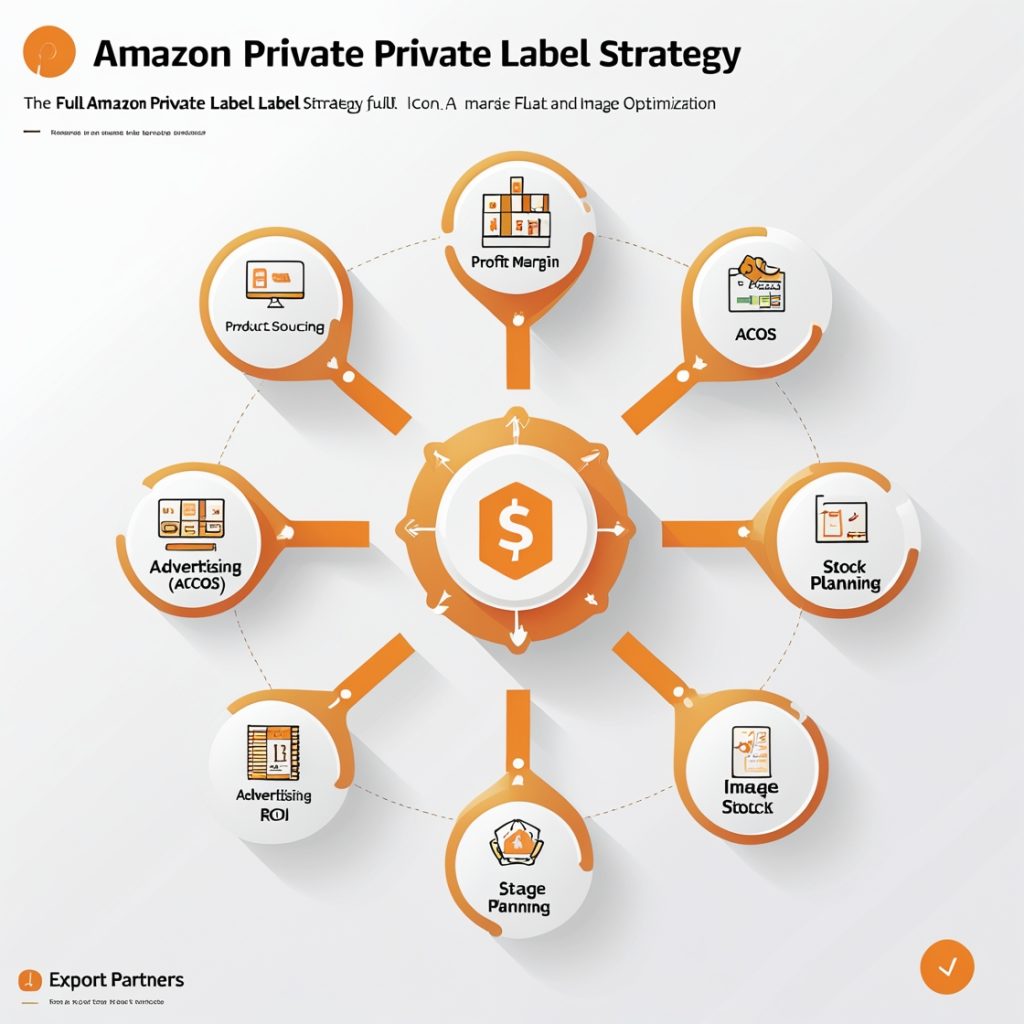
Amazon private label starter guide: what the first 90 days look like
It helps to split the first 90 days into three blocks. Each block has one decision and one output.
| Period | Main decision | What you have at the end |
|---|---|---|
| Days 1-30 | What you will sell and how you will stand out | Product decision, manufacturer list, company and account setup |
| Days 30-60 | How many units, at what cost | Approved sample, first batch quantity, cost table |
| Days 60-90 | How you will look to buyers | Listing, images, launch and advertising plan |
These three blocks depend on each other. Brand Registry cannot be opened until the trademark side is in place, and without Brand Registry, A+ content and some ad formats are not available. Changing the order often costs time.
First 30 days: product selection and differentiation
Selling a product on Amazon that anyone can easily source tends to pull you into price competition. That usually means low profit, high advertising costs and a model that is hard to sustain. The real work of the first 30 days is deciding where your difference will come from.
There are four practical ways to differentiate:
- Technical difference: more durable material, a more functional detail, a different closure or dosage format
- Visual difference: packaging design, color, how easily it stands out on the shelf
- Audience difference: the same product adapted for a specific group of users
- Bundle difference: offering two or three items that are used together instead of a single product
A differentiated product generally converts better with less advertising and can sell at a higher price. This directly affects the cost table in the second block.
At this stage, reading reviews on competing listings is the cheapest way to see which shortcoming customers complain about most. For one home textile manufacturer we worked with, the differentiation idea came from a single sizing complaint that kept repeating in competitor reviews.
First 30 days: company, trademark and account setup
The second track, running in parallel with the product decision, is infrastructure. A delay here directly delays the launch, because most of the later steps depend on it.
- U.S. company and tax ID. LLC formation and an EIN are prerequisites for the seller account and the banking side. For cost items, see our article on the cost of forming an LLC in the U.S.
- Trademark. A USPTO application is a prerequisite for Brand Registry. Since the time between filing and registration can be long, it makes sense to start early. Details are in our Amazon Brand Registry and trademark registration article
- Seller account. Professional account, document verification and, where needed, category approval
- Product-specific compliance. For food, supplements, cosmetics and animal products, the FDA side is a separate track. If you would like support in this process, see our FDA registration and certification service
All four can be started at the same time. Done one after another, the first 30 days can easily stretch to 60.
Days 30-60: samples, production and first batch size
The sample stage is the first place that shows whether your product decision actually holds up. Rushing here carries into every later step, because packaging printed before approval commits the entire batch.
Two opposing pressures shape the size of the first batch. Too little stock lowers visibility and can hurt ranking. Too much stock ties up cash. The starting range commonly seen in practice is 100 to 300 units, but this number varies a lot with the product's unit cost and volume.
When deciding on the first batch, you also need to factor in when the money will come back. We covered how this cycle works, day by day, in our Amazon FBA cash flow article.
Days 30 to 60: net profit margin, ACoS and ROI
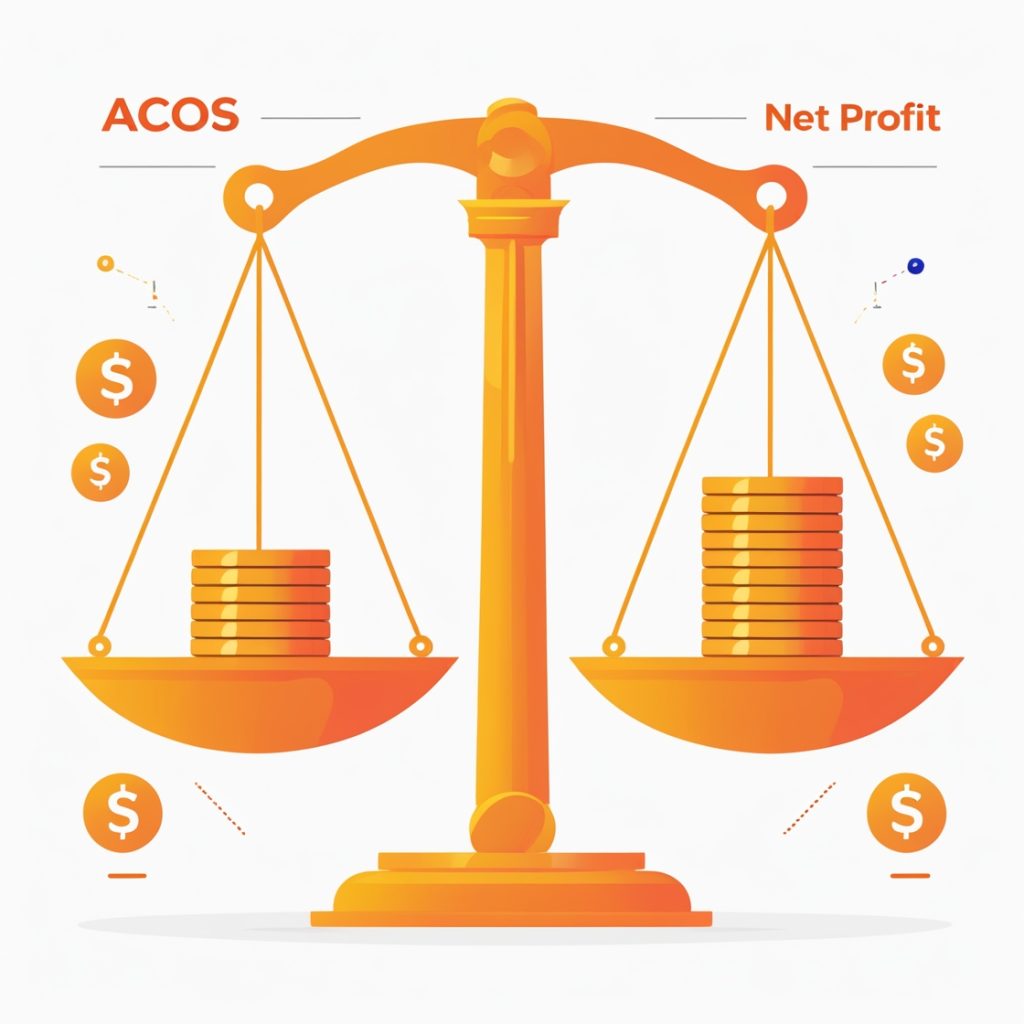
These three numbers can be misleading when they are not read together. Let's illustrate all three with the same product.
Net profit margin is the actual earnings you keep per unit sold. It is what remains of the sale price after product cost, Amazon fees, shipping and other expenses.
| Product purchase price | 5 USD |
| Amazon fees | 3 USD |
| Shipping and other expenses | 1 USD |
| Total cost | 9 USD |
| Sale price | 12 USD |
| Net profit | 3 USD |
| Profit margin | %25 |
ACoS (Advertising Cost of Sales) is the ratio of ad spend to sales generated by ads. If 30 USD in ad spend brought in 100 USD in sales, ACoS is 30%.
Here is the critical point: if your net profit margin is 25% and your ACoS is 30%, those ads are not producing profit. Ideally, ACoS stays below net profit margin. Going above it temporarily during launch can be a deliberate choice, but it needs an end date. The details of bid math are in our Amazon PPC ad management article.
ROI shows what you earn against your total investment. A 900 USD investment and 300 USD net profit means 33% ROI. In other words, every 1 dollar invested earns 33 cents. ROI is measured per batch, while margin is measured per product. The two should not be confused.
Days 60 to 90: listing, images and launch
The first thing a customer looks at when deciding is the product photo. The description comes second. Conversion can rise noticeably when the image set includes these four:
- A high-resolution main image on a white background
- At least one shot showing the product in use
- An infographic explaining dimensions, contents or usage steps
- A comparison image that directly shows your point of differentiation
On the launch side, working with a rational budget tends to perform better than starting aggressively and running out early. For ads to work, stock also has to be sufficient; if stock runs out while ads are running, the budget spent does not come back. For launch plan details, see our Amazon launch and advertising service.
The three most common mistakes in the first 90 days
- Leaving the brand side for last. When the USPTO application is filed late, Brand Registry, A+ content and some ad formats get pushed past launch
- Building the cost table backward from the sale price. Setting a target price first and trying to fit costs into it often leaves the margin below the ad budget
- Scaling the first batch without accounting for the cash cycle. As the batch grows, so does the time it takes for money to come back, and there may be nothing left for the second batch
Frequently asked questions
What is Amazon private label?
It means selling a product made for you by a manufacturer on Amazon under your own brand name. The product is listed under your brand, and you own the listing. The difference from reselling is that you decide the listing and the brand positioning.
What is private label, and is it different from my own manufacturing?
If you manufacture in your own facility, you are effectively already doing private label; the only difference is where production takes place. The Amazon-side steps, meaning brand awareness, listing and launch, work the same way in both cases.
What is the cost difference between private label and dropshipping?
With private label, money goes out up front: production, samples, brand and the first batch. With dropshipping, the upfront investment is low, but since the listing and brand are not yours, you stay more exposed to price competition. Private label costs more, but the value it builds stays with you.
What is Amazon PPC, and is it required at launch?
PPC is an ad model where you pay per click. It is not required, but expecting a new listing to be discovered on its own is not realistic. During launch, ACoS temporarily exceeding margin can be considered normal; what matters is knowing from the start when that will end.
What is SPN, and does it help in the private label process?
SPN is Amazon's network of approved service providers. Working with a provider in this network for account setup, listing and compliance can make communication with Amazon easier when issues come up. Details are in our What is Amazon SPN article.
Conclusion
The summary of this Amazon Private Label starter guide: the first 90 days are not about finding a product but about making four decisions in the right order. What you will sell, on which infrastructure you will sell it, how many units you will start with and at what margin you will appear.
Each of these four can be solved separately, but when the order between them breaks down, the timeline stretches and costs rise. If you would like to build the process together, see our Amazon service.

