
Exporting honey to the U.S. looks like one of the simplest food exports, yet it is
one of the most closely inspected. The product has a single ingredient, processing is simple and shelf life
is long; on the U.S. side, however, the name of the honey, its content and its country of origin are each
checked separately. Registration is lighter than for olives or canned foods,
while inspection is heavier.
In this article we walk through the process step by step: facility registration, the notice required
for every shipment, why the name on the label is inspected, the added sugars line
in the Nutrition Facts panel, FDA adulteration sampling and the duty table
on the customs side. At the end, there is a measured table showing where a manufacturer
stands against competing origin countries.
Which FDA category honey falls under
Honey is a food intended for human consumption, so the facility shipping it to the U.S.
must be registered with the FDA. The registration belongs to the facility, not to the
product: if the same facility ships both honey and dried fruit, a single registration
is enough. Registration is renewed every two years, and a registration that is not renewed
is treated as expired.
In addition to registration, a representative based in the U.S. is required. The US Agent
is the point of contact between the FDA and the facility; when an issue arises, the FDA writes
to that address first. The agent is expected to have a physical address in the U.S. and a reachable
phone number.
A separate notice for every shipment: Prior Notice
Facility registration is done once, while Prior Notice is filed again for every
shipment. Before the goods arrive in the U.S., the FDA is told what the product is, who
it comes from, where it is going and how it is transported.
A shipment arriving without notice may be held at customs.
In practice, this step is often handled by the importer or the customs
broker. Still, it helps to know that responsibility is shared: if the notice
is missing, the goods wait, and storage charges for held goods are usually covered by the
seller side.
Why honey does not need FCE and SID
A manufacturer shipping table olives or canned foods meets a second layer called FCE and SID
on top of facility registration. This layer exists for low-acid canned foods
and acidified foods: a regime in which the product is processed to commercial sterility
and pH and thermal process data are filed with the FDA in advance.
Honey does not fall under either definition. It is neither a low-acid canned food nor an
acidified food; it is a low-moisture product that preserves itself. That is
why the FCE number and SID filing required for olives are not needed for honey.
Registration really is lighter here.
On the label, the name itself is checked first
For honey, the part of the label that causes the most problems is, unusually, the product's
name. The FDA guidance on honey labeling is clear: for the jar to say
“Honey” on its own, it must contain no sweetener other than honey.
If syrup has been added, the name changes and the added ingredient must appear in the name.
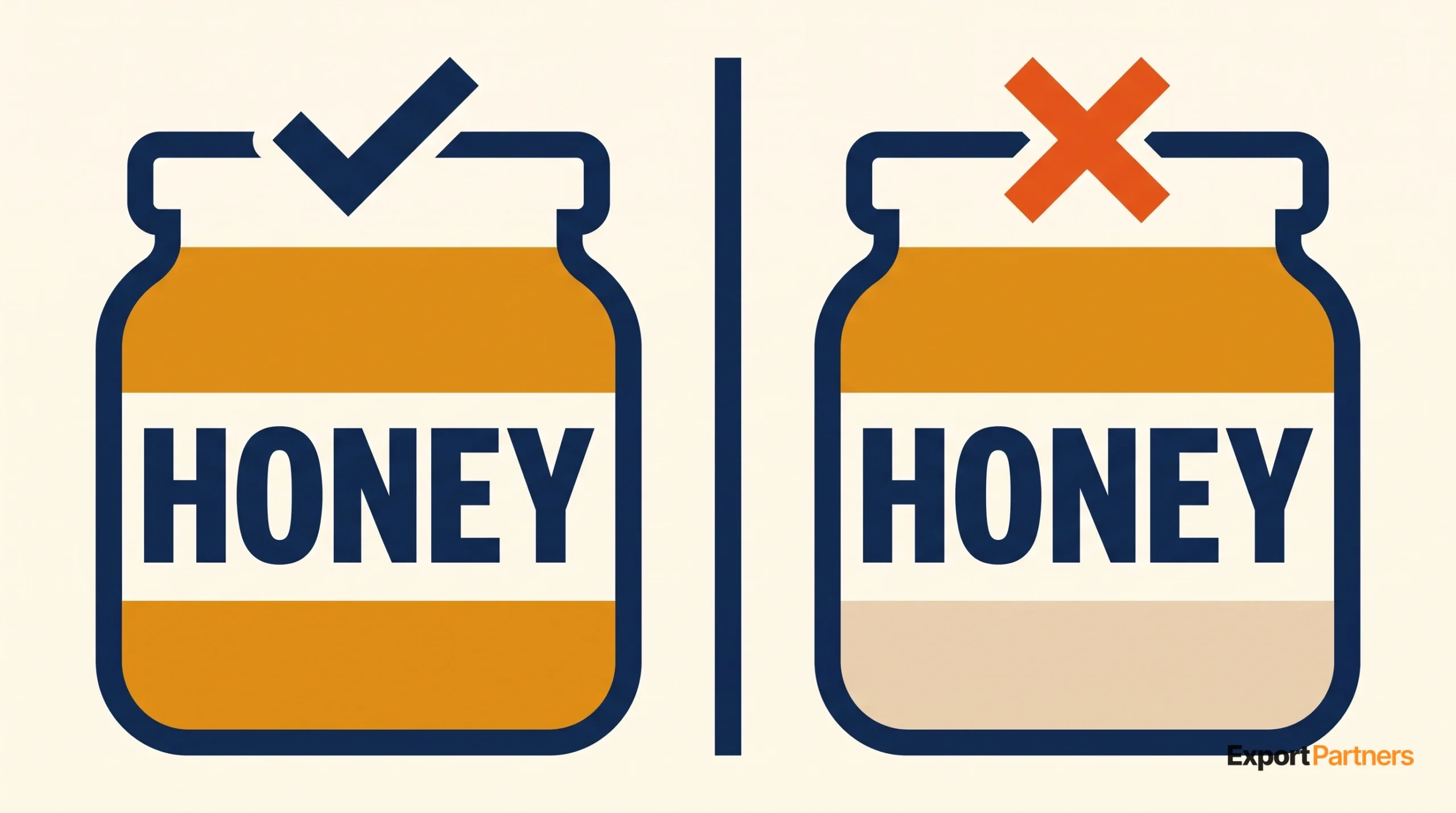
Using a floral source name is allowed, but the product is expected to come
chiefly from that source. Names such as “pine honey” or “chestnut honey” fall under
this rule; a description the product cannot back up may make the label
misleading.
Beyond that, the label carries the mandatory elements required for every food sold in the U.S.:
product name, net quantity (in both ounces and grams), ingredients,
allergen statement, name and address of the manufacturer or importer, and country of origin.
Nutrition Facts panel and the added sugars line
Honey has a special case in the Nutrition Facts panel, and most manufacturers are not
aware of it. When U.S. labeling rules changed in 2016, the “added sugars” line
became mandatory; for single-ingredient honey this line produced an odd result,
because honey itself is sugar and nothing has been added to it.
The 2018 Farm Bill addressed this. Under FDA guidance published in 2019,
single-ingredient honey does not need to declare added sugars in grams;
only the percent Daily Value column is filled in.
The guidance also allows a dagger symbol next to the percentage, with an
explanatory note below. It is optional, but it can help keep the product
from being misread on a buyer’s shelf.
The real risk is adulteration testing
In the U.S., honey is one of the products closely monitored for
food fraud. The issue is simple: honey is expensive, while syrups made from sugar cane, corn, rice or
sugar beet are cheap. Syrup blended in without being declared
is considered economically motivated adulteration, in the FDA’s terms.
The FDA samples honey regularly for this and publishes the results.
The figures from the two published rounds: in 2021-2022, 14 of 144
imported samples, or 10 percent, were found violative; in 2022-2023,
3 of 107 samples, or 3 percent. The rate is falling, but testing
continues.
Products from firms found in violation are added to Import Alert 99-47.
Later shipments from a listed firm can be detained without physical
examination; for goods to be admitted, the firm is asked to provide evidence that overcomes
the appearance of a violation. So the issue does not stay with a single
lot; it attaches to the firm’s name.
The practical takeaway: getting a sugar profile analysis from an independent
laboratory before shipping to a buyer works like low-cost
insurance. Serious U.S. buyers often start by asking for this
report.
Antidumping table: four countries are on the list
Raw honey has been the subject of an antidumping investigation in the U.S.
The investigation was opened in 2021 for Argentina, Brazil, India, Ukraine and Vietnam;
on June 10, 2022, antidumping duty orders were published for Argentina, Brazil, India and
Vietnam.
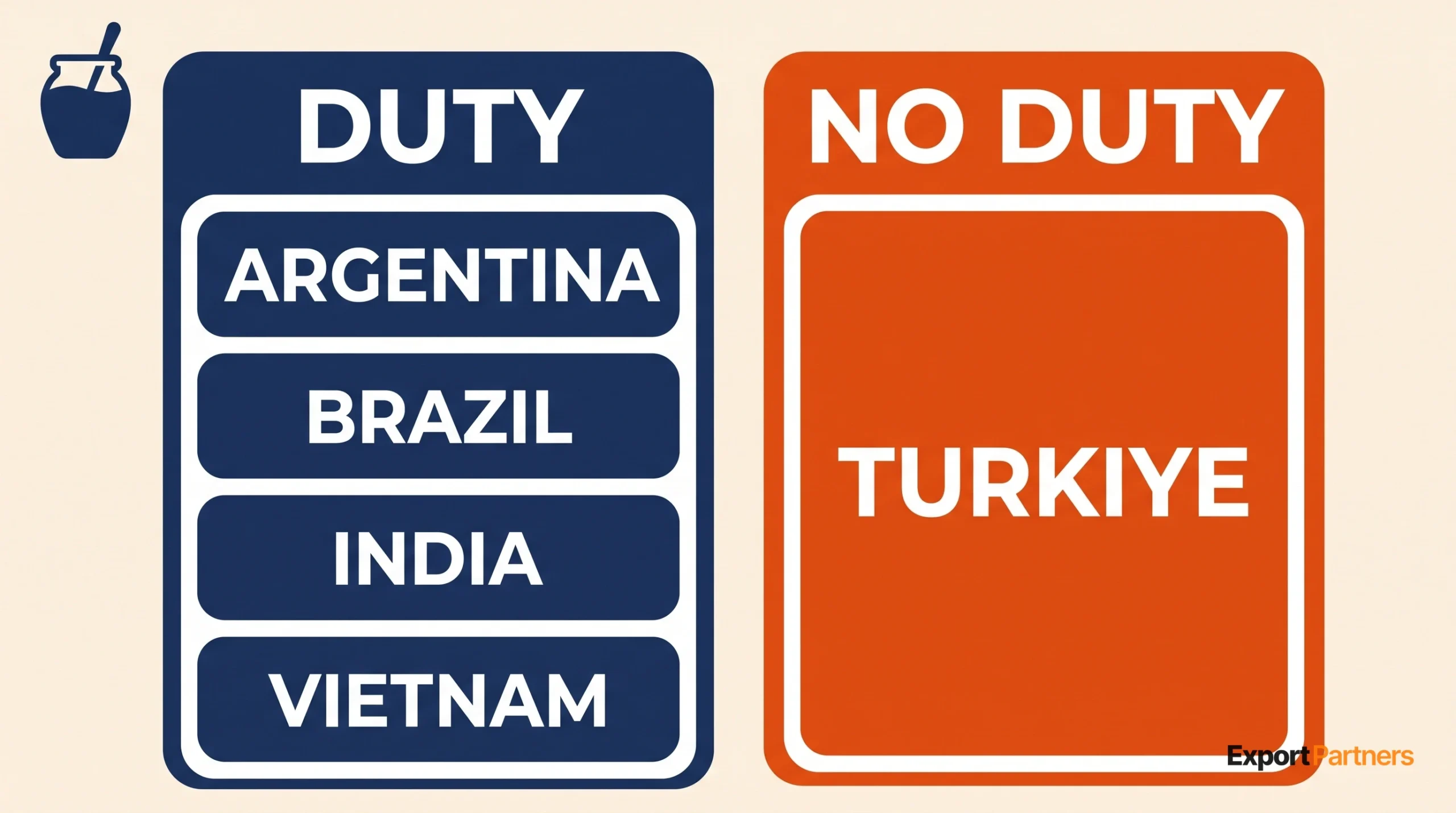
The margins alleged during the investigation were not low: for Argentina
9.75 to 49.44 percent, for Brazil 83.72 percent, for India
27.02 to 88.48 percent, for Vietnam 47.56 to 138.23
percent. Final rates are set per company and can change with annual
reviews.
Many other honey-producing countries are not on this list. This means a U.S.
importer buying raw honey from these four major sources has to account for additional duties,
but not when buying from an origin outside the orders. For manufacturers in those countries, this can be
a concrete advantage in price negotiations and is worth raising in the first
conversation with a buyer.
The order is a document published in the Federal Register; showing the source
when talking to a buyer moves the conversation from a claim to a document.
Customs side: importer registration, bond and country of origin
Even with the FDA side complete, the goods still go through customs separately.
The party bringing goods into the U.S. must be a registered importer and hold a customs
bond. A bond is a guarantee that customs duties will be paid;
for products covered by antidumping orders, the required bond amount may be
higher.
Country of origin is an especially sensitive issue for honey. Lots shipped through a third country
whose origin is not declared correctly are a focus of enforcement;
a shipment leaving directly from the producing country with consistent documents has an
advantage in this respect.
Documents the buyer will ask for
U.S. wholesalers and packers usually ask for the following in the first meeting:
the FDA facility registration number, US Agent details, a honey analysis report
(sugar profile and, if needed, antibiotic residues), the product
specification, a label draft prepared under U.S. rules and
packaging details.
Having this list ready speeds up the conversation. The reverse is also true:
correspondence that starts before the documents are gathered can cost
weeks, even when the buyer is interested.
Frequently asked questions
Is a separate FDA approval required for honey?
No. There is no product-level permit or approval for honey; what is needed
is FDA registration of the facility and Prior Notice
for every shipment. There is no such document as “FDA-approved honey.”
Are the FCE and SID registrations required for olives also required for honey?
No. FCE and SID are required for low-acid canned foods and
acidified foods. Since honey falls outside both definitions,
that layer does not apply to honey.
What does it take to label a product as “Honey”?
The product must contain no sweetener other than honey. If syrup
has been added, the name cannot be just “Honey”; the added ingredient must also appear in
the name. Using a floral source name is allowed, but the product is expected to come mainly from that
source.
Is there an antidumping duty on honey from other countries?
It depends on the origin. Antidumping orders were published for Argentina, Brazil, India and Vietnam;
other origins are not covered by these orders. Since duty rates are set per
company and subject to annual review, it is a good idea to confirm the current
status with your customs broker
before shipping.
Is honey testing mandatory?
The regulations do not require testing for every shipment. However, the FDA
regularly samples imported honey, and firms found in violation can be added to an import alert
list. A sugar profile analysis from an independent laboratory
reduces that risk and is also a document
the buyer already asks for.
Conclusion
For honey exports to the U.S., the registration side is shorter than for olives or canned goods from the same
manufacturer: facility registration, US Agent and Prior Notice for every
shipment. What needs the most attention is the name on the label
and the purity of the product; that is where enforcement is concentrated.
On the customs side, origin currently makes a clear difference:
the antidumping order covers four competing sources, and many other origins fall outside it.
This is a concrete argument that can be backed with documents
in a first meeting with a buyer.
We handle FDA facility registration, U.S. Agent representation, label
review under U.S. rules and customs registration with one team. If you share your product and
target buyer, we can work out together
which steps are needed.

