
Shipping products to an Amazon Germany warehouse means completing the registrations, the importer structure, a hazardous materials review where needed, and the shipment itself in a specific order so that the products are accepted at Amazon FBA warehouses in Germany and opened for sale. For a brand at this stage, the real question is often not "which document" but "in what order." Some registrations depend on each other, while others have to be completed before the goods leave your country. When the order gets mixed up, the container can be in transit and the products in the warehouse while the listing stays closed on Amazon.
In this article we outline the sequence we followed with a brand we supported through its Germany preparation: registrations first, then deciding who the importer will be, then the hazardous materials review, and finally the container, the warehouse and the inbound shipment to Amazon. Since the details of each step depend on the product, we share the roadmap here; the implementation plan is built product by product.
Why does the order matter when shipping to an Amazon Germany warehouse?
Amazon.de expects certain information to be completed in the seller account before the product enters the warehouse. Until the packaging registration, the EU responsible person details and, where required, the hazardous materials review are finalized, the product may not be opened for sale. Because each of these steps runs with a different authority or a different team, a delay in one holds up the steps behind it.
That is why it makes more sense to plan the first shipment backwards: starting from the date you want the product to go live on Amazon, you work out the warehouse check-in, the container transit time and when each registration needs to be completed.
Which registrations are needed before shipping to Amazon Germany? (EORI, VAT, LUCID, GPSR)
There are four core registrations for selling in Germany. We covered the details in our guide to selling on Amazon Germany; here we look only at when each one is needed from a shipping perspective.
| Registration | Purpose | When it should be ready |
|---|---|---|
| EORI number | Company identifier for the import declaration at EU customs | Before the container departs |
| Germany VAT registration | Taxation of sales made from the warehouse in Germany | Before warehouse check-in |
| LUCID packaging registration | Packaging waste responsibility; a number Amazon also checks | Before the listing goes live |
| GPSR responsible person | The responsible contact for the product in the EU; the name appears on the listing | Before the listing goes live |
Recently, a requirement for an authorized representative in Germany was introduced on the LUCID side for manufacturers based outside the EU; for this reason LUCID and GPSR are usually planned together through the same representative. We compiled the changes that took effect in the last quarter of the year in our fall 2026 regulatory update.
Who acts as the importer in Germany, and do you need to set up a company?
When the container arrives at EU customs, an importer has to file the declaration. If the brand will sell without setting up a company in Germany, this role can be taken on by a business partner in Germany under an indirect representation structure. Because the structure you choose determines who carries the tax and customs responsibility, it is healthier to put it in writing before the first shipment. In our article on what you need to sell on Amazon Europe, we compared selling through your existing company versus a German GmbH, along with the EORI and indirect representative structure.
A container that sets off before this decision is made can wait at customs until a declarant is found, and that waiting time can turn into storage fees.
Is your product classified as hazardous material (hazmat) on Amazon?
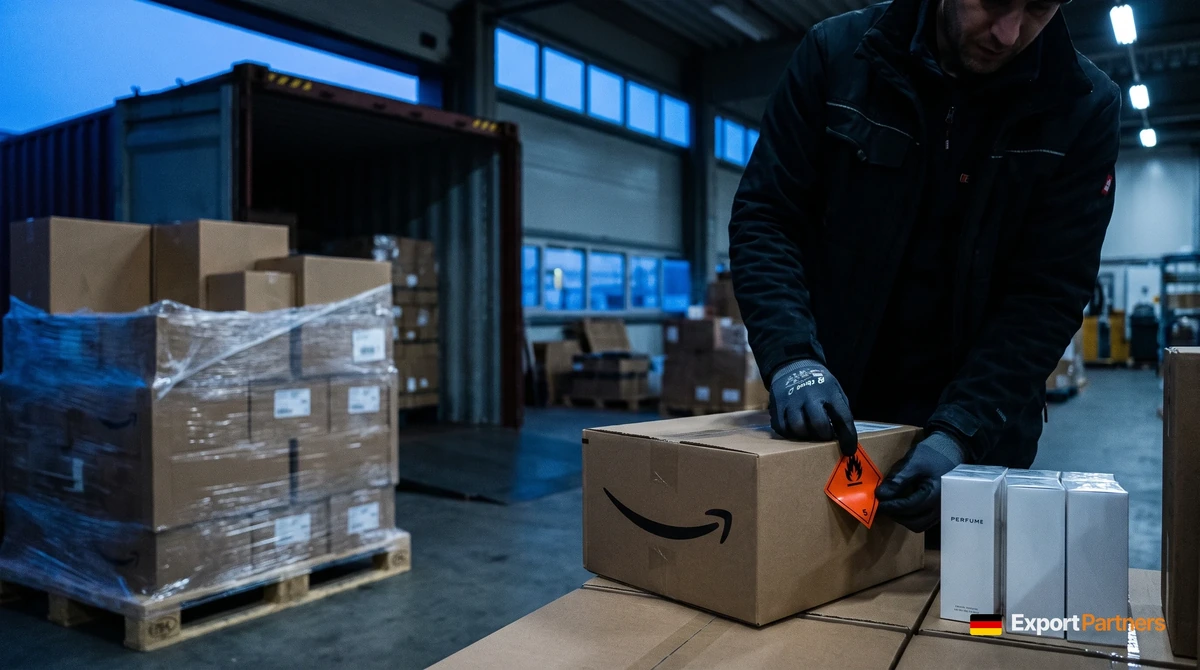
Perfume, alcohol-based cosmetics, aerosols, products containing batteries and some cleaning products can be subject to a hazardous materials (hazmat) review on Amazon. This review is Amazon’s own process and needs to be completed before the product is accepted into the warehouse. A product that has not been reviewed cannot be sent to FBA, or may be held at the warehouse.
The core document for the review is the safety data sheet (SDS, commonly known as the MSDS). Amazon determines the product’s hazard class from this document, and the result affects which warehouse the product is stored in and under what conditions.

Why does the MSDS need to be in German for Germany?
In the EU, the format of the safety data sheet is defined in Annex II of the REACH Regulation, and the sheet must be provided in the official language of the country where the product is placed on the market (REACH, 1907/2006, Article 31). For Germany, this means a German Sicherheitsdatenblatt. An English sheet prepared for the U.S. may not be usable in the Amazon.de review unless it is converted to the EU format and language.
The two issues we encounter most often in practice are:
- The product name and brand on the MSDS must match the product name on Amazon exactly. A different name can cause the review to be sent back.
- The sheet needs to be prepared using the manufacturer’s own formulation data, so keeping the recipe and raw material information ready on the manufacturer’s side shortens the process.
How to send products to an Amazon warehouse: container, warehouse and inbound shipments
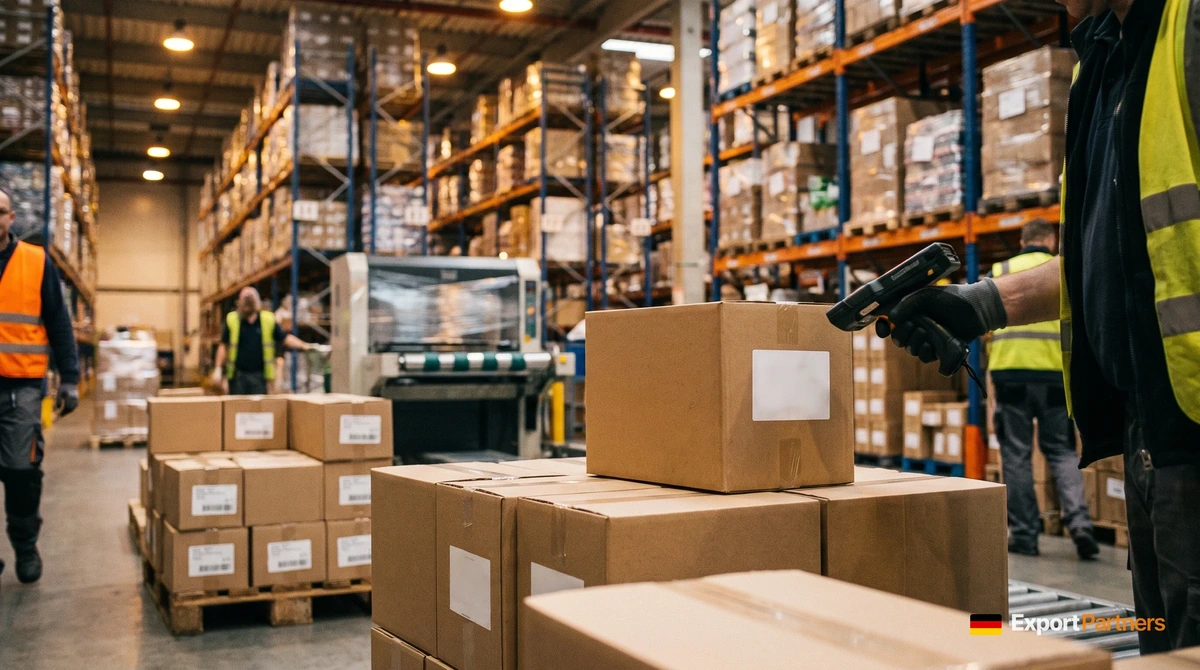
Goods arriving by container usually cannot go straight into an Amazon warehouse: Amazon prefers small, split shipments, and product labels and carton layout also have to be prepared according to Amazon’s rules. For this reason, the container is first unloaded at a warehouse (3PL) in Germany, where the products are brought into the format Amazon requires and then sent to FBA warehouses in batches.
| Step | What happens |
|---|---|
| 1. Container loading | Once the registrations and the importer structure are settled, the goods ship from your country |
| 2. Customs and warehouse entry | The goods enter the partner warehouse in Germany; if hazardous materials are involved, the warehouse must be suitable for that class |
| 3. Inbound shipment to Amazon | Products are labeled and sent to FBA warehouses in batches |
| 4. Going live | Listings are reactivated, and German A+ content and images go live |
For products in a hazardous materials class, the second step is especially important: not every warehouse accepts flammable products. The warehouse choice is finalized once the classification on the MSDS is known.
Where is the most time lost in the first shipment?
Our observation is that delays usually arise not in the documents themselves but in the handoffs between them. LUCID and GPSR cannot be completed until the representative agreement is signed, the warehouse choice is not finalized until the MSDS is ready, and the container plan cannot be made until the warehouse is known. Assigning an owner and a date to each step in this chain from the start can shorten the total time considerably.
If I also want to ship to the UK, does the order change?
The logic stays the same, but the registrations are separate: Amazon UK (amazon.co.uk) requires a separate VAT registration in the United Kingdom and an EORI number starting with GB; the EORI obtained for the EU and the German VAT registration are not valid in the UK. For the hazardous materials review, the safety data sheet is prepared in English and in line with UK rules. For brands planning both markets together, it makes more sense to run the registrations on the same timeline from the start.
Frequently asked questions
How do I send products to an Amazon warehouse?
A shipping plan is created in Seller Central, the products are prepared according to Amazon’s label and carton rules, and they are delivered to the warehouse Amazon assigns. For goods arriving by container, this preparation is usually done first at a warehouse in Germany.
Is VAT registration required for Amazon Germany?
If stock will be held in a warehouse in Germany, German VAT registration is required, and the registration should be completed before the goods enter the warehouse. We cover the details in our guide to selling on Amazon Germany.
Do I need to set up a company in Germany for the first shipment to Amazon Germany?
Not necessarily. The importer role can be taken on by a partner in Germany through an indirect representation structure. Which structure is suitable depends on the product group and sales volume.
Can the MSDS we prepared for the U.S. be used in Germany?
Not directly, in most cases. In the EU, the sheet must be prepared in the REACH Annex II format and, for Germany, in German. Even if the content data stays the same, the format and language are reworked.
Can perfume be sold on Amazon Germany?
Yes, but it usually goes through a hazardous materials review. The review requires a German MSDS and information that matches the product name on Amazon; the warehouse choice is also made based on this classification.
Can I send the container directly to an Amazon warehouse?
It is possible but generally not preferred. When the container is first unloaded at a warehouse in Germany and the products are sent from there to FBA in batches, labels, carton layout and stock planning are easier to manage.
Conclusion
The first shipment to Amazon Germany consists of steps that are manageable when taken one at a time; the difficulty lies in carrying them out in the right order and on the same timeline. When the registrations, importer structure, hazardous materials review and warehouse plan are handled together, the sales side is ready by the time the container is on its way.
To plan your Germany preparation around your product, you can take a look at our Amazon Germany service or contact us.

