
FDA Detention and Red List Process
Products detained by FDA at U.S. customs are one of the areas where exporters lose the most time. In food, cosmetic and medical product exports to the United States,
the detention of products during FDA (Food and Drug Administration) review is one of the most critical risks for exporters.
FDA's aim is to check whether imported products meet the standards that protect U.S. public health.
So, what happens if your product is detained by FDA at U.S. customs?
Why does this happen, and how can it be resolved?
1. Products Detained by FDA at U.S. Customs: What Is Detention?
An FDA “detention” decision means an imported product is held at customs on suspicion of not meeting FDA standards.
The product has not been refused yet, but a review or document verification takes place before the import is completed. We cover this topic in detail in our article FDA Labeling and Customs Service Guide: Exporting Frozen Food to the U.S..
The most common reasons:
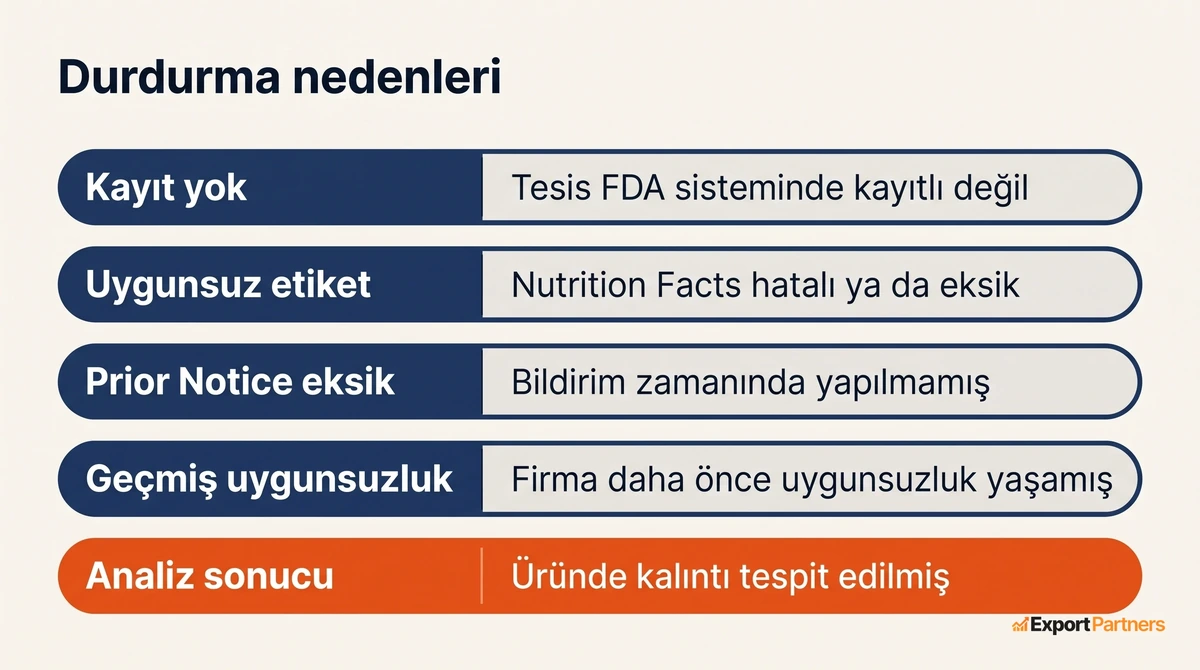
- The facility has no FDA registration, or the registration has expired
- Inconsistencies in label information (Nutrition Facts or Supplement Facts errors)
- An incomplete Prior Notice submission in the FDA system
- The product was manufactured by a firm with a history of noncompliance
- Suspected microbiological or chemical residues (for example aflatoxin, heavy metals, bacterial contamination)
In this case, the product moves to an FDA physical examination or document request stage.
3. What Happens If a Product Is Detained?
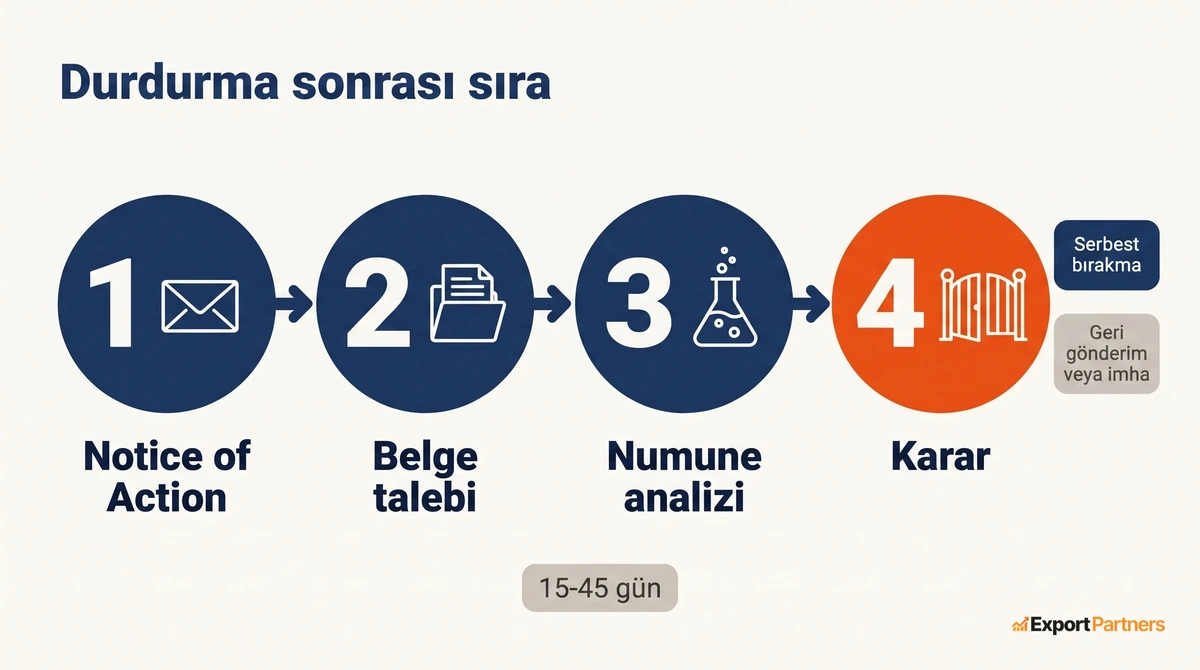
When a product is detained, FDA typically follows these steps:
- A Notice of Action is issued (with product or lot details).
- Explanations and corrective documents are requested from the manufacturer or importer.
- If needed, a product sample is sent for laboratory analysis.
- If FDA finds the product compliant, it is released (Release Notice).
- If the product is found non-compliant, it may be:
- Returned to the exporter (exported),
- Or destroyed.
- Returned to the exporter (exported),
This process typically takes 15 to 45 days.
4. Reasons for Detention and How to Resolve Them
| Reason | Explanation | |
| No FDA Registration | The manufacturer or facility is not registered in the FDA system | |
| Noncompliant Label | Errors in Nutrition Facts/Supplement Facts | ı |
| Missing Prior Notice | The product notice was not submitted on time | |
| Red List Record | The firm has a history of noncompliance | |
| Residue/Analysis Issue | Microbiological or chemical residues detected in the product |
5. Getting Off the Red List (Removal from Red List)
Getting Off the Red List (Removal from Red List)
Removal from the Red List is possible, but it involves a technical application process that requires care.
At this point, Export Partners coordinates directly with FDA and manages the process on your behalf. Our article FDA Registration, GMP Compliance and the Customs Process for Vegetable Oil Exports to the U.S. may also be helpful.
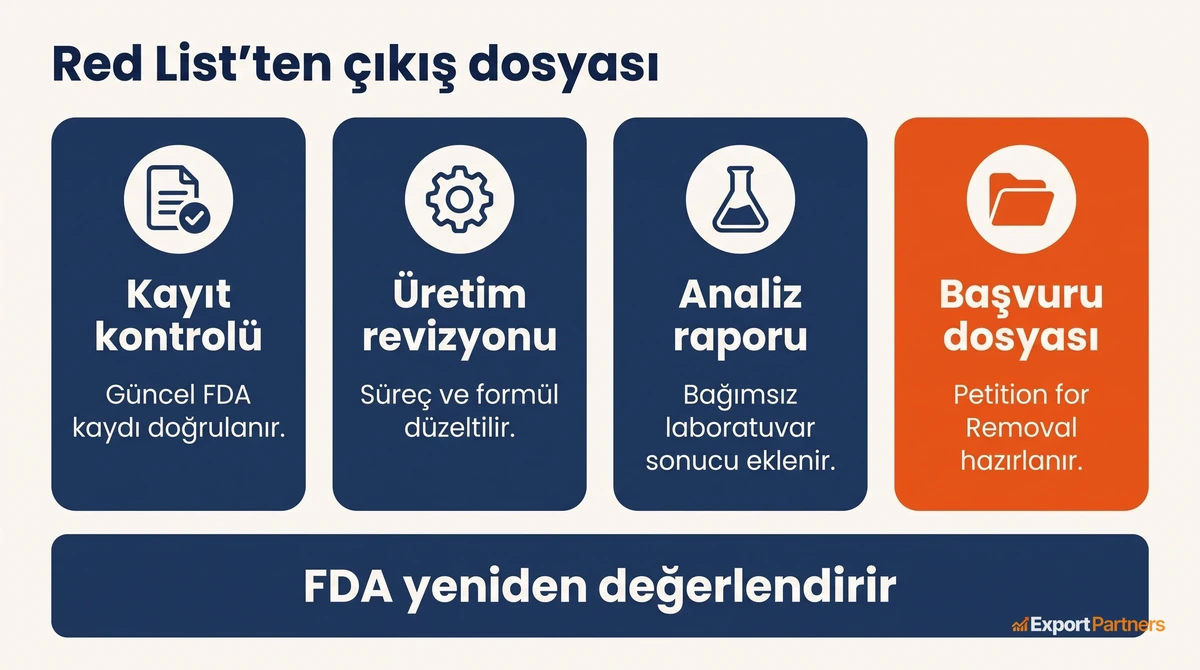
This application, called a “Petition for Removal,” requires preparing a formal file for FDA that documents the corrections your firm has made and shows that it now meets the compliance criteria.
In this process, we:
- Review your current FDA registration and renew it if anything is missing,
- Align production processes and formula revisions with FDA standards,
- Obtain the required laboratory test reports,
- Revise labels and packaging according to FDA labeling rules,
- Submit the Petition for Removal file to FDA and actively follow up on the process.
Once this process is complete, your firm can be removed from the FDA Red List and your products can again be imported into the U.S.
The average processing time ranges from 30 to 90 days.
At Export Partners, we prepare the application file and handle all correspondence with FDA on your behalf.
This helps your products become eligible again for import and sale, without extended waiting at customs.
6. The Role of Export Partners
As Export Partners, *through our FDA service we work as a solution partner on all import issues that require coordination with the FDA.
*Our FDA registration and certification service
The support we provide:
- FDA Food Facility Registration & Renewal
- FDA Red List check and Petition for Removal
- Prior Notice filing
- Label & Ingredient Review
- U.S. Agent support
- *U.S. Customs (CBP) coordination
*https://www.usa.gov/agencies/u-s-customs-and-border-protection
This helps reduce waiting time at customs, lower the risk of Red List placement
and keep your products moving smoothly through the FDA system.
Frequently Asked Questions
What does being placed on the FDA Red List mean?
If a company has had compliance issues in the past, its products may be detained automatically.
Is it possible to be removed from the Red List?
Yes. When a petition is filed with the right documents, the list can be updated.
What is Prior Notice?
It is the advance notification to the FDA for every food product shipped to the U.S. If no notice is filed, the product may be held automatically.
Does FDA registration prevent Red List placement?
A current registration and accurate labeling can significantly reduce the risk of Red List placement.

