
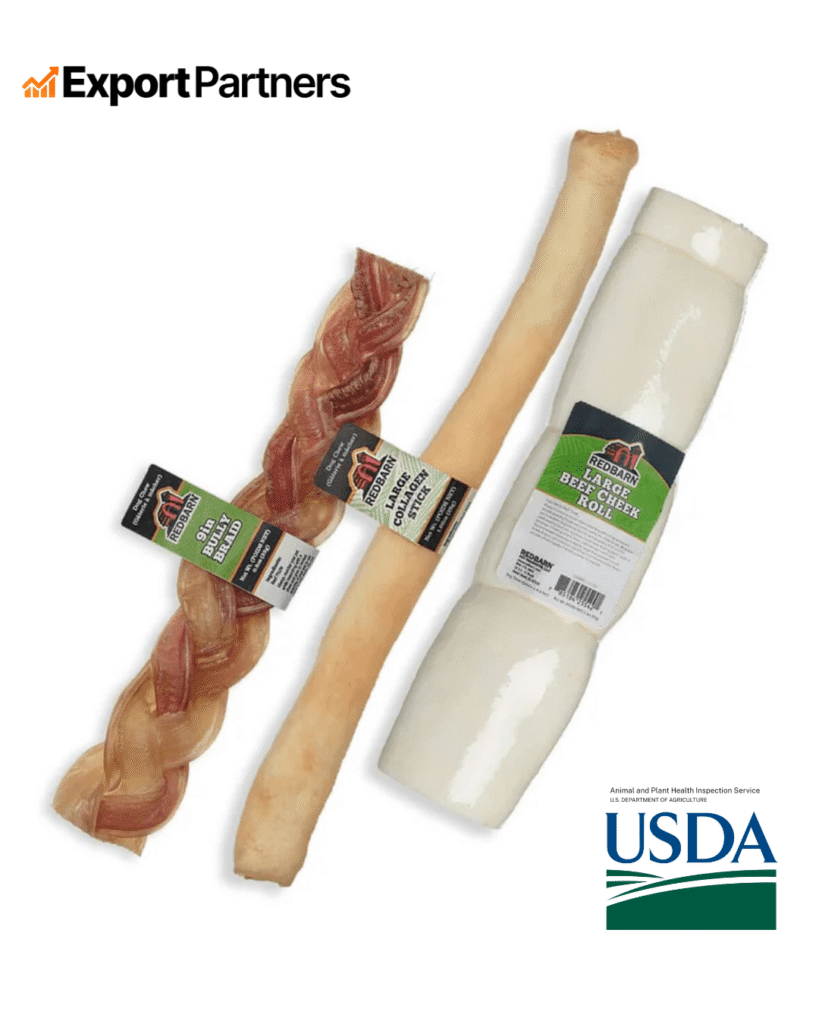
1. Natural Dog Chews and the U.S. Pet Food Market: A Massive Ecosystem
Shipping natural dog chews to the U.S. means entering one of the most dynamic corners of a growing market. The U.S. is by far the global leader in pet food and pet treats. The market continues to grow, and interest in natural products accounts for a significant share of that growth. Demand for Natural Dog Chews and Plant-Based Pet foods in particular has been rising quickly in recent years.
We handle permit classification and applications for chews on behalf of manufacturers: USDA and APHIS permit service.
Pet owners prefer products that are free of chemical additives, sourced sustainably and supportive of animal health. There are roughly 90 million dogs and 110 million cats in the U.S., which means about one in every two households has a pet, and this broad market creates a strong foundation for the growth of natural and plant-based products. You can also read our related article, What Is CE Marking and Why Is It Required for Exports to Europe?
Consumers are no longer looking only for “cheap pet food”; they want natural, sustainable, additive-free and cruelty-free products.
This shift has created strong demand in three categories in particular:
- Bully Stick: Natural chew sticks made from dried beef pizzle
- Dog Chews: Long-lasting chews made from animal or plant-based ingredients
- Plant-Based Pet Treats: Treats made entirely from plant-based ingredients
For manufacturers in countries with a strong food processing infrastructure, these segments can offer a high value-added, lower-competition export opportunity.
2. U.S. Regulations: The Difference Between FDA and USDA
Every manufacturer that wants to export pet food or pet treats to the U.S. must work under FDA (Food and Drug Administration) or USDA (United States Department of Agriculture) requirements, depending on the product's ingredients.
A. Animal-Derived Products (Bully Stick & Dog Chews)
Because these products are of animal origin, they are subject to a USDA Veterinary Services (VS) permit.
The manufacturing facility must also hold an FDA Food Facility Registration.
At import, CBP (Customs and Border Protection) checks both the FDA and USDA records together.
Required Documents:
- FDA Food Facility Registration
- USDA VS Import Permit
- Veterinary health certificate (issued by the exporting country's veterinary authority)
- COA (Certificate of Analysis)
- Label compliance review; a “Not for Human Consumption” statement is required
Without these documents, the product is unlikely to clear U.S. customs. The U.S. customs system evaluates animal-derived products in particular under “biosecurity” rules.
USDA Permit Process:
- The origin of the raw material, the production method and the sterilization temperatures are reported.
- Even if the product is not “human grade”, a permit can be obtained with a “pet use only” statement.
- The process takes about 2 months on average.

Bully Stick: USDA or FDA?
1. Primary Regulatory Agency: USDA APHIS (Veterinary Services)
Yes, the primary regulatory authority is the USDA.
This is because bully sticks contain animal tissue, hide or organs (usually beef pizzle).
For this reason, they fall under the “animal by-product” category in U.S. regulations.
In this case, a permit from the USDA, Animal and Plant Health Inspection Service (APHIS), Veterinary Services (VS) is required.
This permit is known as the VS-16 Import Permit.
Products that have not been sterilized (for example, through cooking or high-heat treatment) generally cannot enter the U.S.
Key points
- Bully stick products are primarily under USDA oversight. Because they contain animal-derived materials, a Veterinary Import Permit (USDA VS Permit) is required for entry into the U.S.
- The FDA is usually a secondary agency. If the product is sold only as an “animal chew” rather than as “food,” FDA registration is not required, but it can add an extra layer of assurance.
2. When Does the FDA Get Involved?
The FDA gets involved in two situations
A. If the product is classified as “pet food,” meaning it makes a nutritional value claim:
For example, if the label includes claims such as “high protein treat,” “digestible chew” or “supports dental health,” the product is treated as “animal food”.
In this case, the FDA requires Food Facility Registration (FFR).
B. If the manufacturing facility also produces other pet food products:
In other words, if the same facility makes pet food, treats or chews with added ingredients, that facility should have FDA registration.
3. A Simple Example
| Product Type | Regulatory Agency | Required Documents |
| Dried beef bully stick (sterilized, no additives) | USDA (VS Permit) | USDA Veterinary Permit + Health Certificate |
| Protein-enriched or flavored dog chew (meat-based) | USDA + FDA | VS Permit + FDA Facility Registration + Label Compliance |
| Plant-based dog chew (vegan) | FDA | FDA Facility Registration + Label Review |
| Treat with added food or vitamins | FDA | FDA Facility Registration + Product Review |
4. How It Works at U.S. Customs
At U.S. customs, products are screened in the Customs and Border Protection system by both USDA-APHIS and the FDA PREDICT System.
The system looks at the product’s “intended use” declaration:
- “For animal chew use only” → mainly USDA
- “For animal consumption / treat” → FDA is also involved
In other words, the label, product description and HS code determine which agency becomes involved.
5. Conclusion and Summary Recommendation
- USDA permit (VS Permit): required
- FDA registration (Food Facility Registration):
- If the product will be treated “as food” → required
- If it is only a sterilized “chew” → recommended but not required
The safest approach:
USDA + FDA completed together, which makes an “entry hold” or “FDA review required” notice at U.S. customs much less likely.
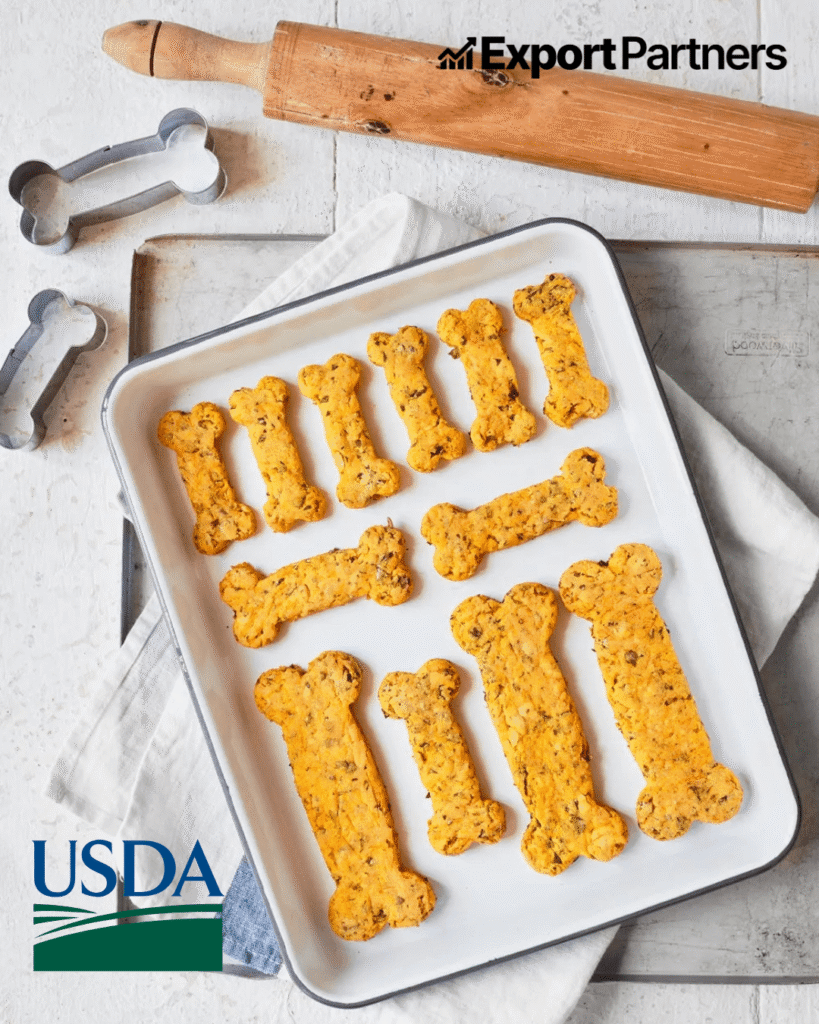
B. Plant-Based Pet Treats
For fully plant-based products, the USDA is not involved, but FDA regulations apply.
These products usually contain ingredients such as pea protein, chickpea flour, oats, olive oil and vegetable fiber.
Required Steps:
- FDA Facility Registration (facility registration)
- Appointment of a U.S. Agent
- Label & Ingredient Compliance Review
- Preparation of the Nutrition Facts Panel
- Allergen declaration (for example: soy, wheat, nuts)
The FDA expects every claim on the label (“vegan,” “natural,” “organic”) to be substantiated.
In addition, under 21 CFR Part 501, Animal Food Labeling, the following information is required on labels:
- Product name (for example: “Vegan Dog Chew Sticks”)
- Ingredient list (in descending order by weight)
- Net weight
- Manufacturer name, address and FDA number
3. The U.S. Customs Process and Key Considerations
When exporting pet food to the U.S., an FDA Prior Notice must be submitted before the products arrive at the port.
This notice allows the FDA to review the shipment electronically in advance.
Export and Customs Process Steps:
- Prior Notice Submission (FDA PN Form)
- USDA or FDA registration verification
- Customs Entry Filing (CBP 3461)
- APHIS inspection (Animal and Plant Health Inspection Service)
- FDA Release (clearance)
4. E-Commerce Platforms: Amazon and Shopify
For pet food exporters, Amazon and Shopify are among the most attractive sales channels.
However, Amazon may request FDA documents before approving sales, especially in the edible pet product category.
Documents Amazon May Request:
- FDA Facility Registration Confirmation
- USDA VS Import Permit (if applicable)
- COA (Certificate of Analysis)
- Label Image and Ingredient List
- Responsible Party (U.S. Agent) details
5. Opportunities and Strategic Advantages for Manufacturers
Key areas where manufacturers can build an advantage in the U.S. market:
| Area | Potential Strength |
| Production | Established food processing technology and meat industry infrastructure |
| Cost | Competitive raw material prices |
| Certification | Existing HACCP, ISO and GMP systems |
| Concept | A strong “natural pet food” positioning |
| Geography | Efficient logistics access to major markets, including the U.S. |
In addition, for plant-based pet treats, locally sourced chickpeas, oats, barley and vegetable fiber can provide a competitive advantage.
In the U.S., the “eco-friendly pet products” trend continues to grow.
As a result, imported natural pet treat brands can position themselves in both Amazon and the B2B distributor market.
6. Conclusion: Regulatory Compliance Determines Success
Exporting pet products to the U.S. is not only about logistics; it is also a regulatory management process.
FDA, USDA and CBP closely oversee how products are manufactured, labeled and imported.
Products shipped with incorrect or incomplete documents may be refused at the port, which can lead to high costs and damage to brand reputation.
For this reason, every manufacturer should handle the following steps professionally:
- FDA Facility Registration and U.S. Agent appointment
- USDA Veterinary Import Permit (for products with animal-derived ingredients)
- Label & Formulation Compliance Review
- Customs bond and U.S. customs registration
- Amazon listing approval or distributor approval

7. Freeze-dried treats: longer shelf life, the same open questions
Recently, demand from U.S. buyers has been shifting toward freeze-dried treats. The details of this product line are covered in our article on exporting freeze-dried dog treats. Because most of the water is removed, the product becomes lighter, its shelf life gets longer and the need for a cold chain may disappear. For overseas shipments, this can noticeably simplify freight and storage, since more product fits into the same carton volume.
A common misconception here is that processing takes the product outside the rules. The processing method alone is not decisive; which agency covers the product becomes clear only when the animal and country of origin of the raw material and the way the product is processed are evaluated together. Freeze-drying extends shelf life, but whether a permit is required is determined by the distinction explained in the sections above. That is why asking about the product’s own breakdown before planning a shipment is usually easier than trying to fix things at customs later.
Questions from buyers generally fall into three areas: the origin of the raw material, the registration of the manufacturing facility and whether the label complies with U.S. rules. All three can be prepared before shipment; when they are not ready, the delay happens not in the shipment itself but in the paperwork.
Seeing how this product group is presented in the U.S. market can be useful for a manufacturer preparing its own catalog. A sample catalog showing how product names, weight options and ingredient statements are written can be reviewed in the freeze-dried dog treats catalog.
Compliant Exports with Export Partners
Export Partners works with licensed representatives in the U.S. and Canada to provide the following services from a single point of contact:
- FDA & USDA registration and permit processes
- Obtaining a D-U-N-S number
- Label & ingredient compliance review
- Customs bond & customs services
- Amazon, Shopify and distributor integration
Email us today:
You may also be interested in: Exporting Pet Food and Animal-Based Food to the U.S.
Other guides in this series
This guide is part of a series on FDA processes for exporting to the U.S. Related guides:
- APHIS, FDA and AAFCO steps for exporting pet food to the U.S.
- The FDA and USDA process for exporting animal-based food to the U.S.
- FDA registration, GMP and customs for vegetable oil exports
- For registration and certification support, see our FDA registration and certification service.
Last updated: October 6, 2026

