
This article covers the customs process in Germany: exporting from your country, EORI, importer responsibilities, customs codes and the documents you need. We hope you find it useful. Our article on simplified export declarations for e-commerce may also help.
Shipping products to Germany is technically both an export and an import, so it is subject to customs rules. Depending on the trade arrangements between your country and the European Union, some simplifications may apply, but certain procedures still need to be followed:
- Export procedures (your country): First, complete the preparations required of an exporting company in your home country. Joining an exporters' association can be useful, since it may give you access to incentives and up-to-date information. You will usually work with a customs broker to file the export declaration and prepare documents such as the commercial invoice and packing list. Germany is known for high quality and safety standards, so make sure your products comply with the applicable rules (for example, products that require CE marking should carry it). If your goods are selected for a customs inspection, the relevant certificates and declarations of conformity may be requested.
- EORI Number (Economic Operator Registration and Identification): Every company that exports to or imports into EU countries needs an EORI number. The EORI number identifies your company in the EU customs system. For your company to carry out customs procedures in the EU, it should obtain an EORI number from the German customs administration before its first import into Germany. You can apply through the online portal of the German customs administration (Zoll) or by completing the required form and sending it by e-mail. The application asks for company details such as your tax identification number. Applying while your goods are in transit may be possible, but obtaining the EORI number in advance helps avoid delays. Without an EORI number, your customs procedures in the EU generally cannot begin.
- Importer Responsibilities: An importer must be named when goods enter Germany. The importer is the party placing the products on the EU market and is legally responsible for their compliance with EU rules. If you have not set up your own company in Germany, the importer may be your logistics provider or customs broker; even then, obligations such as product safety, correct labeling and recalls when needed may still rest with your company. At import, the tariff codes of your products (HS codes) must be declared correctly. Each product has an international HS code (Harmonized System Code) and an EU Combined Nomenclature (CN) code; these codes classify the product and determine the applicable duty rates, required permits or restrictions. For example, cosmetics and electronics fall under different HS codes, and depending on the code some products may be subject to anti-dumping duties or special permit requirements in the EU. Assigning the correct codes to your products and stating them on the pro forma invoice is therefore very important.

- Required Customs Documents: The key documents to prepare for the customs process when exporting to Germany include:
- (1) Commercial Invoice: An invoice in English showing the sale price, buyer and seller details, product description, quantity, unit price and total amount.
- (2) Packing List: A detailed list showing the contents, weight and dimensions of each carton.
- (3) Certificate of Origin: Shows the product's country of origin; some buyers or customs authorities may request it. Depending on the trade agreement between your country and the EU, a movement certificate such as the EUR.1 may allow your goods to benefit from reduced or zero customs duty. The EUR.1 certificate is used to prove preferential origin for goods covered by such agreements. With a correctly issued EUR.1, your products may be imported into Germany with reduced or no customs duty.
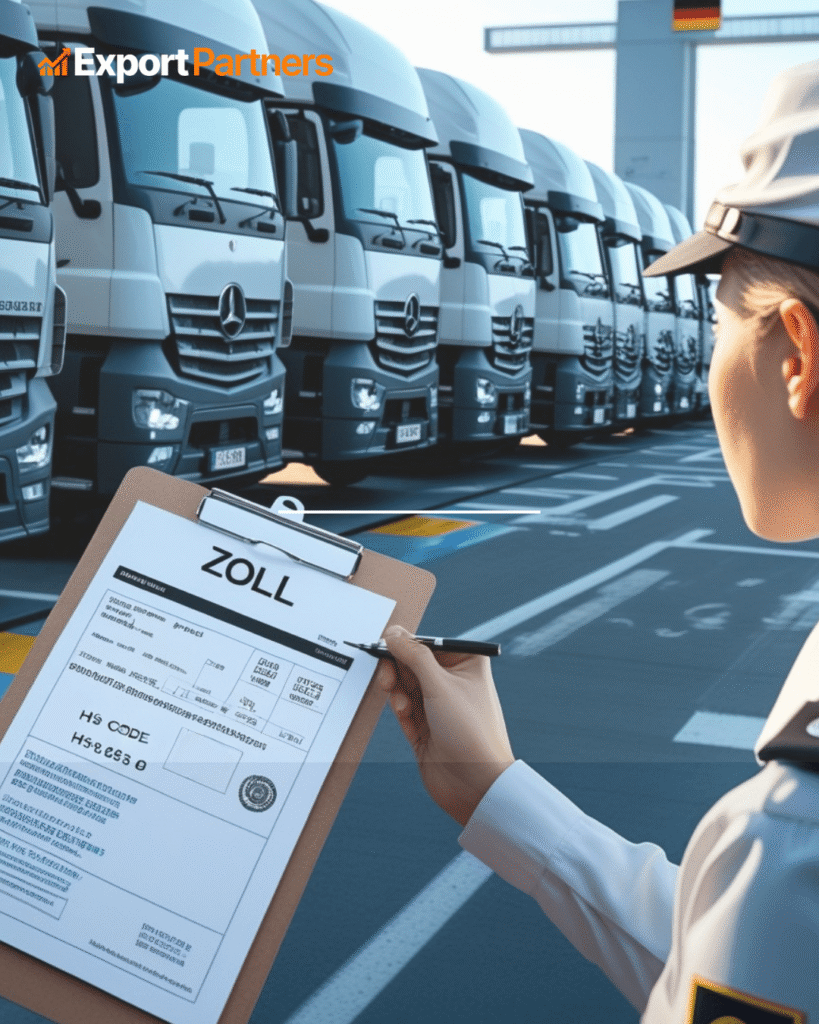
- (4) Transport Documents: These depend on the mode of transport, for example a CMR for road freight, an Air Waybill for air freight and a Bill of Lading for ocean freight. If you have a door-to-door arrangement with a carrier, the carrier usually issues these documents, but as the exporter you are responsible for checking that the information is accurate.
- (5) Insurance Policy: A document showing that the goods are insured during international transport (required if you sell under CIF or CIP Incoterms).
- (6) EUR.1 Movement Certificate: As mentioned above, an official document issued or endorsed by the competent authority in your country, used to claim preferential treatment under an applicable trade agreement.
- (7) Compliance Documents: Depending on the product, additional documents may be required at customs, such as health certificates for food, fumigation certificates for plant products or a CE declaration of conformity for electronics. For example, if you export cosmetics, you may be asked for an export health certificate from the competent authority in your country.
- Customs Duties and VAT: Depending on the trade agreement between your country and the EU, many industrial products may enter with reduced or zero customs duty. As long as you present a valid EUR.1 certificate and declare the correct HS code, your products may be imported into Germany without paying customs duty. However, import VAT applies to goods entering the EU. The standard VAT rate in Germany is 19%. At import, import VAT of 19% is paid on the value of the goods plus freight and insurance. If your company is registered for VAT in Germany, this amount can generally be deducted later in your VAT return (so it is ultimately recoverable). Your customs broker will guide you on paying the VAT and any customs duties during clearance. Once payment is made and checks are completed, German customs releases your goods for free circulation, and they can continue to an Amazon fulfillment center or any other destination within Germany.
Note: Because customs procedures can be complex, working with an experienced logistics company and a licensed customs broker is essential. Getting in touch with Export Partners about keeping all export and import documents consistent (for example, listing Amazon's warehouse address as the consignee, since you are delivering to Amazon, and your own company as the bill-to party) can help prevent delays.
Customs Process and Taxation in Germany (VAT, OSS, Getting a German Tax Number, Fiscal Representative)
Before you start selling on Amazon Germany, you should plan your VAT (MwSt) registration and filing process. In the Amazon FBA model you store and sell your products in Germany, so you are required to register for VAT in Germany. Here are the tax topics, step by step:
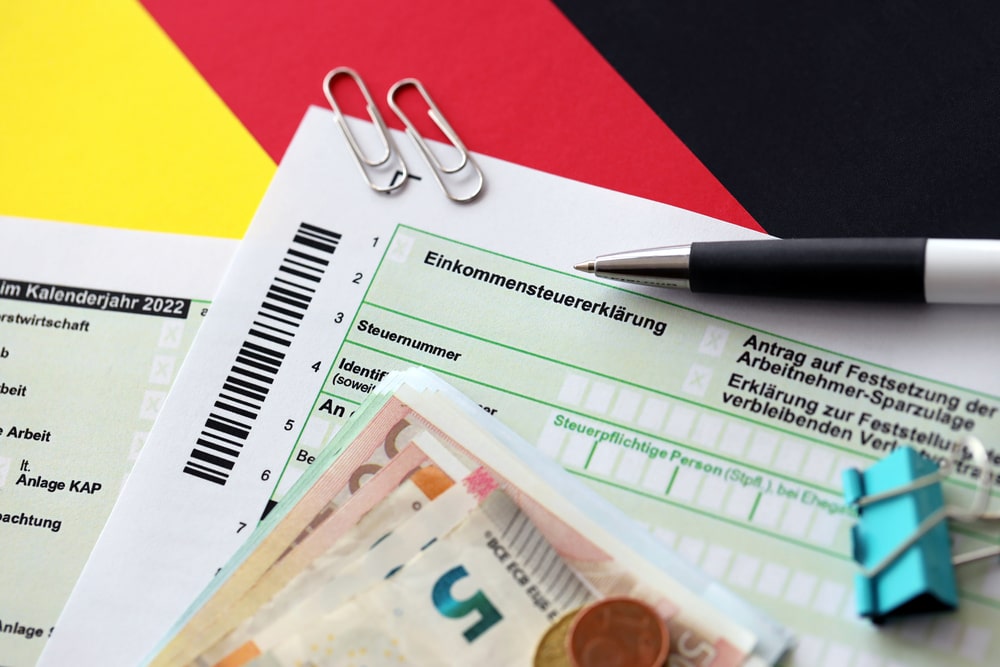
- Getting a German VAT Number (USt-IdNr): Foreign companies register for VAT in Germany by applying to the Federal Central Tax Office (BZSt). The application can be submitted through the online portal or on a paper form. It asks for your company name, address, line of business, estimated annual turnover in Germany and a copy of your commercial register extract. Processing can take several weeks; once the review is complete, you are assigned a German VAT number. The number is issued by the tax office (Finanzamt) and follows the EU-wide VAT-ID format (Umsatzsteuer-Identifikationsnummer). After you receive it, enter it in your Amazon account settings and include it on your invoices for sales in Germany. You will also need to file periodic VAT returns in Germany (for new sellers, usually monthly or quarterly).
- VAT Rates and Returns: The standard VAT rate in Germany is 19%. A reduced 7% rate applies to some products (for example, most food, books and children's clothing). Cosmetics, electronics and kitchenware generally fall under the 19% rate. Because you sell from a warehouse in Germany, these are domestic German sales and you charge 19% VAT on each sale. Under marketplace facilitator rules, as in most EU countries, Amazon collects VAT from the customer in Germany in certain cases and reports the net amount to you; however, the filing responsibility remains yours. In each filing period you report your total sales in Germany and the VAT collected to the German tax office and pay any amount due. VAT paid at import can be shown on the same return as input VAT and offset. At year end you also file an annual VAT return in Germany (Umsatzsteuer-Jahreserklärung).
- The OSS (One Stop Shop) System: OSS is an EU system that simplifies VAT reporting for cross-border e-commerce. If you sell products stored in Germany to customers in other EU countries, VAT becomes due according to each destination country. Under the 2021 rules, once your total annual EU distance sales exceed €10,000, VAT is owed in the destination countries regardless of individual country thresholds. Instead of registering for VAT separately in each country, an OSS registration lets you report and pay for those sales centrally in one country (for example, Germany). After registering for VAT in Germany, you can apply for OSS and report your EU-wide B2C sales through a single window. Under OSS you report your intra-EU distance sales to the BZSt every quarter and pay the country-by-country VAT amounts in one payment, which Germany then distributes to the relevant countries. For example, if you sold from your German warehouse to a customer in France, you report the French sales amount and 20% French VAT on your German OSS return, so you do not need a separate registration or return in France. Note: OSS covers distance sales only. If you later start storing inventory in another country (for example, France), you will need a separate VAT number there (OSS does not apply in the country of storage; it covers sales to other countries while you have a single warehouse).
- Fiscal Representative Requirement: Some EU countries require non-EU companies to appoint a local fiscal representative for VAT matters. Germany does not have this requirement. Your company can register directly with the German tax office and obtain a VAT number without setting up a German company. Germany treats fiscal representation for foreign companies as optional and limits it to specific cases involving tax exemptions, for example companies that pay import VAT at customs and make transit sales without creating a VAT liability inside Germany. In your case, since you will make taxable sales in Germany, you register your company as a VAT payer yourself. Working with a tax advisor or accounting firm is therefore not mandatory, but it is strongly recommended. Because German tax procedures (especially the language and paperwork) can be complex, support from a local certified tax advisory firm helps ensure returns are filed correctly and on time. E-commerce focused advisors offer German VAT registration and filing services to sellers from abroad. Without professional support, mistakes may occur in correspondence with the German tax office, in avoiding penalties and in keeping up with regulatory changes.
To read our blog post on the Germany FBA private label process, click here.
In summary: before taking steps in the German customs process, complete your tax registrations and enter your German VAT number in the Tax Information section of your Amazon account. Then, as you sell, stay compliant by filing your domestic German VAT returns and, where needed, your OSS returns on schedule. Regular and accurate VAT filing matters both for keeping your Amazon account in good standing and for meeting your legal obligations.

